Fish Symbolism

As kids, our dad took us fishing on many occasions, sometimes at Lake Reba, one of the ponds on our farm, or on the banks of the Kentucky River that ran near our property. Much like other childhood memories, he ensured we were cared for, from baiting our hooks to removing any fish we might catch to retrieving our tangled lines out of the trees (mostly the latter, in my case). And let’s not forget the chicken liver-baited hook slapping into the eye incident. We somehow survived.

As I got older, I still enjoyed fishing. As you may recall, after many years of dreaming about fly fishing, I finally crossed that one off my bucket list. You can read that blog here. It was a fantastic experience, and as I stated in the article, I loved wearing the waders way too much.  

I’ve often wondered what the fish symbol meant in Christianity when I saw it on the back of cars. I eventually related it to Matthew 4:19, where Jesus called His first disciples, asked them to follow Him, and promised to make them fishers of men – without deeper consideration on my part.

In The Holman Illustrated Bible Dictionary, I recently cast my net a little further and found that the early Christian church used the Greek words “Jesus Christ, Son of God, Savior” as a cipher that spelled ichthus. The fish became a standard Christian symbol used as a secret code (Brand, 576).

Furthermore, in the Old Testament, fish in a net symbolized God’s judgment (Ps. 66:11; Ezek. 32:3). Jesus compared the Kingdom of Heaven to a net thrown into the sea and loaded with an array of fish in many varieties (Matt. 4:18-19, Brand 576).

The beginning of Jesus’ earthly ministry was preceded by baptism by John the Baptist and God, the Father, announcing Him as His Son. Once John was thrown in prison, Jesus knew His time had come. He began teaching the gospel message. Jesus’ ministry, as denoted by the New Living Translation Study Bible, had three main features: teaching, announcing the Kingdom, and healing. Matthew 4:12 – 11:1 shows that after being announced by John the Baptist and the Father (3:13-17) and His obedience by enduring testing in the wilderness (4:1-11), Jesus the Messiah was prepared for ministry.

Likewise, after we are baptized and announced clean by the Father, the Holy Spirit immediately enters our hearts and helps us fight against the temptations of our past; we are equipped to proclaim the gospel message to others.

We must sometimes put on our waders (God’s armor) and tread the creek beds where the fish are – allowing God to help us fight our spiritual battles as we cast our nets further and point others to Christ by how we live. It takes a leap of faith to go where God leads us. Sometimes, suppose we stay on the bank instead of following, we can get entangled in the trees around us or symbolically slapped in the face with chicken liver – anything the devil uses to keep us from going – fears, doubts, trust issues. Just as my dad took care of all our needs while fishing, our heavenly Father ensures we have all we need as we fish for His people.

Jesus’ first message shows us that we must repent and turn to God to follow Him (Matt. 4:17, ESV). Letting others know there is hope is good, but helping them realize they need hope in Christ is essential. We must first see our brokenness to recognize the need for our Savior, Jesus Christ.

How can you strap some waders on this week and cast your net for God?

“The harvest is plentiful, but the laborers are few” (Matt. 9:37, Emphasis added).
Reflections

This past weekend, I was frantically trying to finish writing my paper for class and keeping one eye on the weather so that if a window of opportunity opened, I would be ready to pounce and head to the lake for one last kayaking adventure for the season. As I finished writing the conclusion, I realized that the rain clouds had dissipated, and the sun began to peek through ever so slightly. This was a gift – and I didn’t let it pass me by.

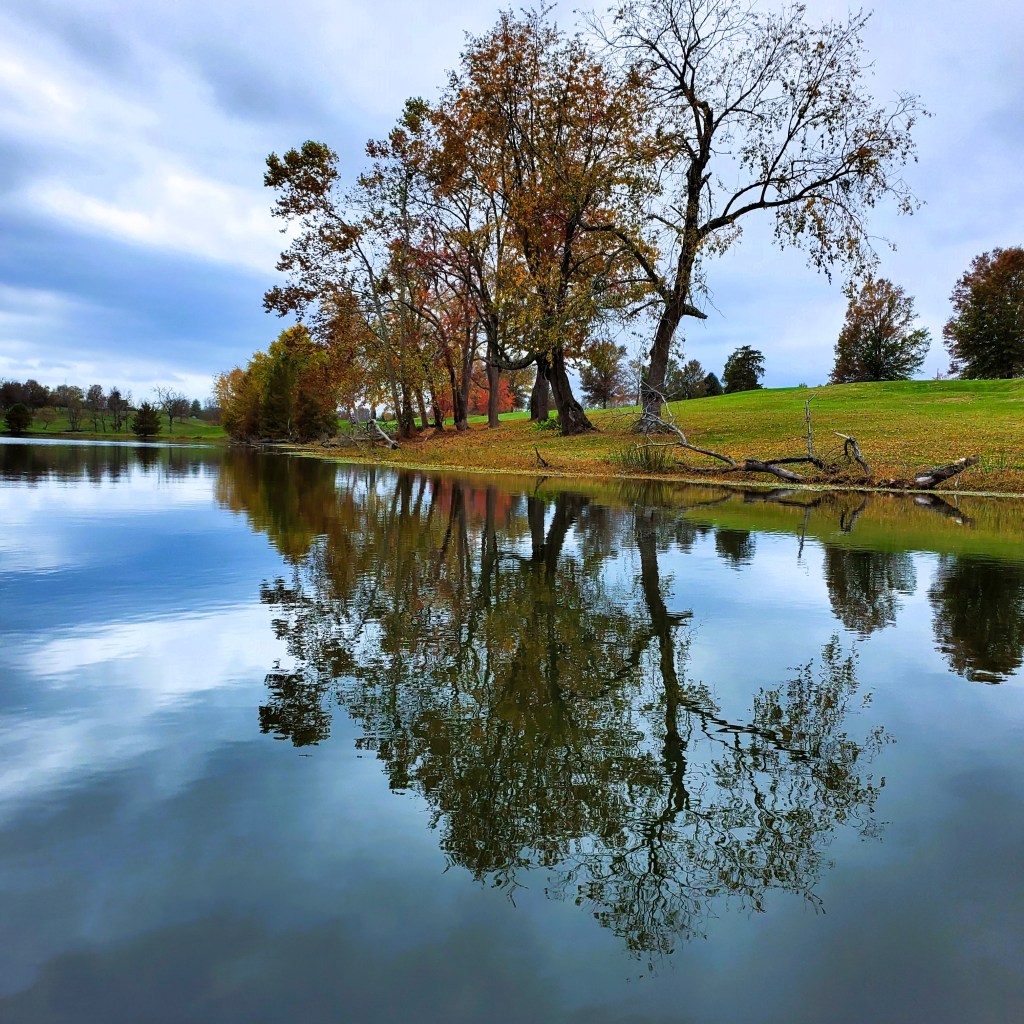
As I launched into the water, it seemed to be calmer than usual, and as you can see from the photo above, as I entered my favorite cove, I was enamored by the Fall colors and how the reflection on the water looked like glass. Over the last few weeks, I have gone to the same lake every weekend, but each time it presented a different experience. One weekend, the water was choppy, allowing the ripples to supply a bit of a workout as I was headed into the wind.

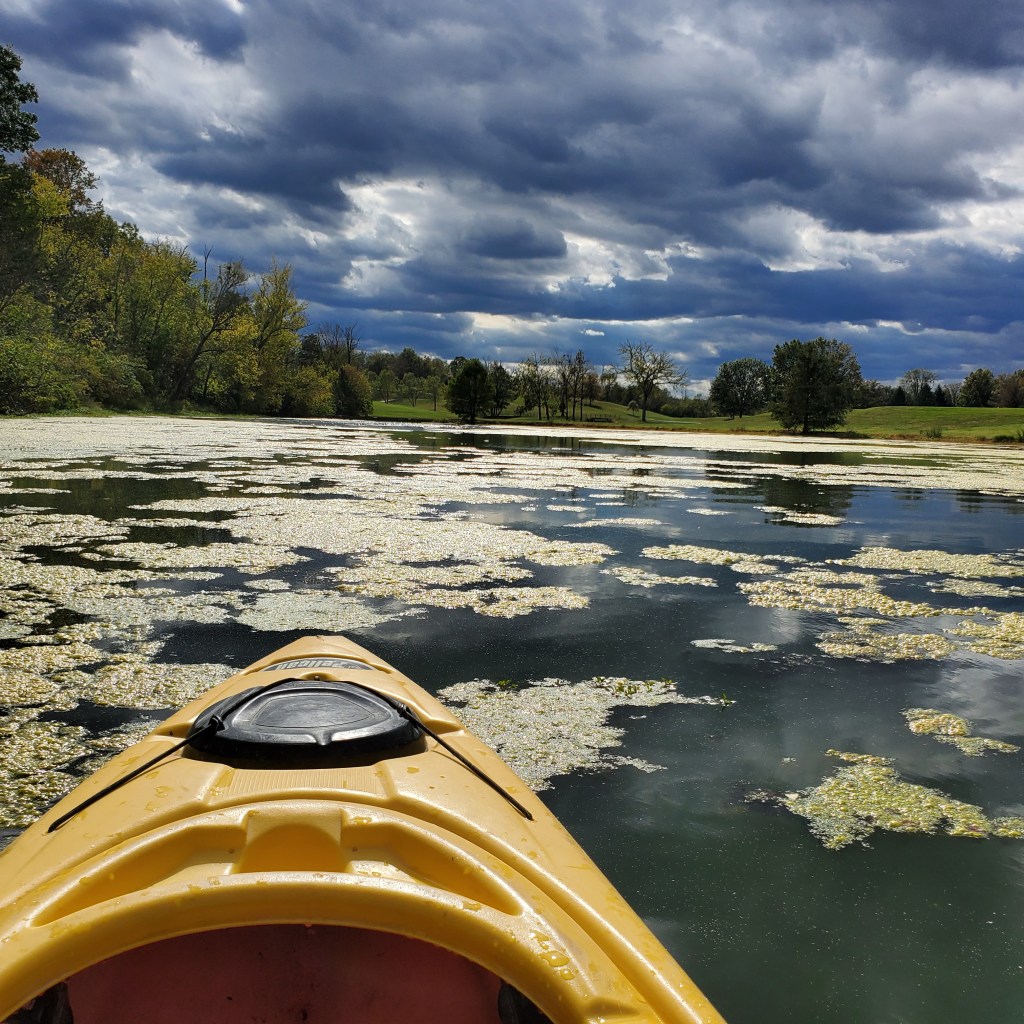
Another time, the sun was shining brightly as I maneuvered through the moss-covered waters to coast upon the cove and was greeted by a magnificent brown spotted egret that adorned the water’s edge. And there were a couple of weeks so chilly I had to wear a jacket. I am delighted to say that for my last hoorah, I did not need a coat this weekend.

I sat there, taking it all in for several solemn moments as the area surrounding the lake was bustling with activity from squirrels and birds– an awe-inspiring moment with the Creator I saw as another gift. Not only did I get to kayak to the middle of all this action and see fantastic views and fall colors, practically having the lake all to myself, but I was able to photograph them as well – another one of my favorite hobbies. (Combining hobbies makes me smile).

Being on the water gave me a different perspective than I had ever experienced when taking photos of Autumn colors. It was a new way to look at the trees. Upon further reflection, these variations at the lake made me think about the changes in our lives. Change, good or bad, can cause a certain level of anxiety at times. But as the Greek philosopher Heraclitus famously said, “Change is the only thing constant in life.”  How we look at change can make a difference.

As Christ-followers, we are called to constant change – through sanctification – to become more Christlike. It is a gradual change over time but a necessary one so that we can conform to the image of Christ (Rom. 8:29). Paul encourages the Romans not to conform to this world but to allow their minds to be renewed through transformation (Rom. 12:2). Striving for spiritual growth is paramount to this. We can begin to welcome these changes in our lives because we can experience a more intimate relationship with God, who, then, we can relate to as our Abba Father.

This kind of relationship can be found through the love our Father has for us and the love we give back to Him and others. Paul also tells the Romans that nothing in all creation will ever be able to separate us from the love of God (Rom. 8:39). Reflect on that for a moment. Isn’t that excellent news for sinners like us?

Next time you get to be in nature – whether on the lake or in the woods – take the opportunity to reflect on the awe-inspiring design of a loving God who redeems, restores, forgives, and accepts us just as we are. As we enjoy His creations as the gifts they are meant to be, we can begin to reflect on the unimaginable Paradise to come. What a day that will be.

“There is therefore now no condemnation for those who are in Christ Jesus” (Rom. 8:1, ESV, Emphasis added).

Expect the Best

As my kayaking journey continues, I have discovered the peace of a deep Sabbath rest. I look forward to escaping the week’s cares by embarking on the lake’s calm waters after church each Sunday. I have decided to do more of what brings me joy, and kayaking in nature in the presence of God brings my heart joy. Once I get in the vessel and launch myself into the luring waters, my only focus is the quiet cove that has become my destination these last few weeks. Even this weekend’s cooler temperatures were not a deterrent, as I enjoyed the lake all to myself. What else can a girl ask for?

I asked God to show me how to get a deep Sabbath rest just a few weeks before finding my new hobby. As we put Christ first in our lives, we can expect His best – because Christ is the best.

When we ask for forgiveness, accept Christ into our hearts, and receive the gift of the Holy Spirit, it is like winning a trifecta – a win, win, win. Still, it does not mean we are exempt from the troubles in this broken world (John 16:33, English Standard Version); only that we can experience peace and joy no matter the circumstances around us. We can escape our worries by entering the deep rest God is offering. We cannot carry the weight of the world – but because of Jesus – we don’t have to.

“Come to me, all who labor and are heavy laden, and I will give you rest. Take my yoke upon you, and learn from me, for I am gentle and lowly in heart, and you will find rest for your souls. For my yoke is easy, and my burden is light” (Matt. 11:28, emphasis added).

When we make that decision, we become heirs to the King of Kings – we cannot do anything to get it, nor can we do anything to lose it. When Jesus went to the cross, the veil was torn from top to bottom. What does that mean? In the Old Testament, a curtain in the temple separated the most holy place from the holy place. People brought sacrifices for their sins to the high priest, and only he could enter the most holy place (where God’s Spirit resided) and then only on the Day of Atonement. He presented the sacrifices to God on their behalf (Lev. 16:2; 2 Chron. 3:14).

With the new covenant, Jesus became the ultimate sacrifice for all sins. The promises of God find their Yes and Amen in Christ (2 Cor. 1:20). The curtain between God and humanity was torn at Jesus’ death. He abolished the barrier that separated us from His presence (Matt. 27:51; Mark 15:38; Luke 23:45). The Hollman Bible Dictionary explains, “Through faith in Christ the veil is removed, and believers enjoy free access to God who transforms life” (Brand 2015; 2 Cor. 3:15-18).

The temple and most holy place of the Old Testament that once housed the Glory of the Lord (Ezek. 41:23; I Kings 6:17) now lives in the hearts of believers through the gift of the Holy Spirit (Acts 10:45). This is why in the New Testament Paul says our bodies are the temple of God and we are made more and more like Him as we are changed into His glorious image (1 Cor. 6:19-20).

When we focus on our destination and path forward – keeping our eyes on Jesus – the author and finisher of our faith ((Heb. 12:2), we can enjoy the journey even more. We can expect a deep Sabbath rest away from the cares of this world, even amidst everything going on around us. It’s like being on a calm lake alone in the presence of God and His magnificent creation. This is the Good News of the Gospel that combats and overshadows the bad news of this broken world and allows us to experience peace now as we look forward to an eternal resting place with our Heavenly Father.

What brings your heart joy? Does it give you a deep Sabbath rest away from the cares of this world so you can be refreshed? If so, do more of that. Not sure what that looks like in your life – ask God to show you your deep Sabbath rest. When we put God first, we can expect His best.

Now the Lord is the Spirit, and where the Spirit of the Lord is, there is freedom” (2 Cor. 3:17, emphasis added).

Brand, C. ed., (2015) Holman Illustrated Bible Dictionary, B & H Publishing.