
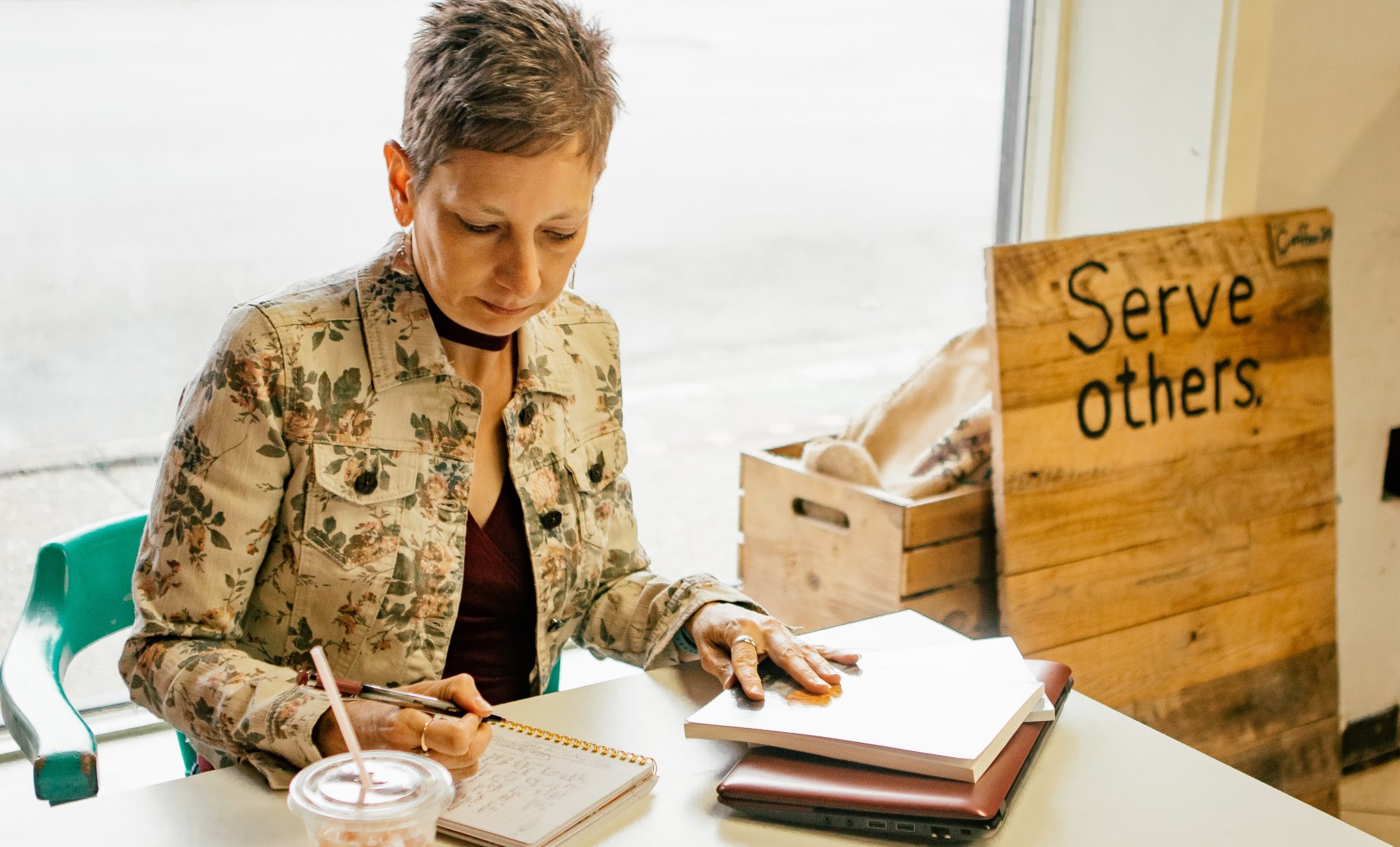

Red Nail Polish

At age nine, one Sunday morning after being baptized, I sat on the edge of my bed with the idea of painting my fingernails bright red while wearing my white dress. That went about as well as you can imagine.

Upon reflection, I now realize this was a superb foreshadowing of my sin-stained purity and innocence. It followed me from my teenage years into adulthood—stains only God could restore, at age 47, through the blood-stained lamb of Jesus.

That’s a long time to carry the weight of sins, shame, and guilt without knowing Jesus as I do now. Still, God had plans for me—plans I had no way of seeing at the time. He rescued me from an abusive relationship, spared my life in a tragic accident that took my sister’s life, and showed me a new way to live. For the first time, kneeling, I asked God what He wanted—and the weight lifted immediately. It is never too late to make a U-turn.

Looking back, I see how the grace of God covered me even before those fiery trials. He kept me protected, though I was unaware and naïve to the enemy’s tactics on a path destined for disaster, pain, and heartbreak.

Nevertheless, I was restored to purity, like a water lily—a bloom that emerges from the mud. Only God, in His infinite wisdom, grace, and love, could redeem me and use my testimony for good to fulfill His purpose and bless me by helping others see a different path—a path I didn’t know existed during my hiatus from God—a path shrouded in lies, doubt, and deceit.

The enemy turns up the heat, twisting the truth and convincing us it’s okay to pursue happiness by following our hearts and to seek momentary pleasure by making sinful acts appear pleasant and desirable. At the same time, God wants a better life for us, one marked by joy, peace, freedom, and love, regardless of our circumstances. He desires an intimate relationship with us that makes all our other relationships better. The path to freedom, paved with stones of grace, provides a solid foundation for navigating this life and its many stumbling blocks.

Jesus is our guide through the power of the Holy Spirit. Through Him, we have mighty weapons to destroy strongholds, restore peace, and make the devil take a hike, shooting him in the foot before he can get it through the door. With a whisper of Jesus’ name, we can thwart his plans (Eph. 6:12-18).

Friend, if you’ve experienced baptism and called upon Jesus Christ to forgive your sins and to proclaim Him the Son of God, you have the gift of the Holy Spirit (Acts 2:38) and spiritual weapons —use them to fight for your freedom and do not turn back to your old path. I encourage you to pursue a relationship with God that draws you closer and makes Him your first love.

If you haven’t, what are you waiting for? Freedom, peace, and forgiveness await you. You don’t have to face this world and its many vices alone. Confess Jesus as Lord, repent of your sins, and let the waters of baptism refresh your soul and wash away the dirt of your past. Believe me, no bar of soap is big enough to do that on our own… Jesus Christ is the way, the truth, and the life (John 14:6, ESV).

The grace of God is big enough to cover all our sins, no matter what they are. If God saved someone as broken as me—He can save you too.

Grace, be with you.

Love God. Love People.

Let God sort out the rest.

“Therefore, there is no condemnation for those who are in Christ Jesus” (Romans 8:1).

“For I am sure that neither death nor life, nor angels nor rulers, nor things present nor things to come, nor powers, nor height nor depth, nor anything else in all creation, will be able to separate us from the love of God in Christ Jesus our Lord” (Romans 8:37-39).

The Bridge Over the Grand Canyon: Finding Grace in Family and Faith

As a mother sobs over a distant or rebellious child, Jesus weeps for His children who deny Him as King. Luke records Jesus’ lamenting over the lost, How often would I have gathered your children together as a hen gathers her brood under her wings, and you were not willing” (Luke 13:35, ESV, emphasis added)! Jesus mourns the fate of Jerusalem, a fate that also applies to all of Israel.

As we enter Mother’s Day weekend, some moms, unfortunately, can relate to mourning a distant child. It can be a day of bittersweet hope. Like the Prodigal Son, we grieve for the one and anticipate celebrating their homecoming, whether in this life or the next. I grew up as the youngest of five children in a conservative home that seemed normal to me. It wasn’t until I peered back through the glass of my past, in a season of healing, that I realized why I became a people-pleaser, a tendency that led to some of my darkest days.

Granted, there may be other reasons, but one major factor was witnessing firsthand what happens to a mother’s heart and spirit when a child denies their ties. The unspoken grieving in our home, and the rejection and discord stemming from behavior deemed unsuitable, not only caused heartache but also division as deep as the Grand Canyon. Grace is the only bridge that can span that canyon.

As the youngest child, I knew I didn’t want to cross that line—a line that felt unbearably irrevocable. Still, I had my teenage moments of rebellion and the unpleasant attitude that seems to come naturally with your fourteenth birthday. I am talking more about the later years, when you recognize how hurtful your actions can be to a parent. Hello, people-pleaser. Mind you, I didn’t escape the ungodly behavior, but I got very good at hiding secrets—an anxious misery I do not recommend. The masquerade party gets old quickly.

On the other hand, what a blessing it is to have a loving relationship with your child through both good and bad times. Open communication is critical. Just as Jesus laments over those who do not call on Him, He welcomes all who do. Because of Jerusalem’s resistance to God, its house (the temple) was desolate. Jesus says that if the lost want to see Him properly, they must greet Him with these words, “Blessed is He who comes in the name of the Lord” (Ps. 118:26)!

Until recently, I didn’t realize that Jesus wept over Jerusalem (Luke 19:41). Jesus still feels deep sorrow over rejection, clearly reflecting the heart of God the Father over His children.

When the disciples praised Jesus during His triumphant entry, some Pharisees tried to suppress their joy by rebuking them and asking Jesus to silence them. Jesus proclaimed that if they stopped praising, the very stones would cry out, because all creation was made to worship the King who is Lord of all (Luke 19:40).

It is impossible to be silent when Jesus comes into your life.

In reflection, put yourself in the story. Would you shout praises as Jesus rides by, or be one who silently rejects Him?

There was a time in my life when I was silent, but thankfully, by the grace of God, I now shout His praises from the rooftops for rescuing me and loving me even in the darkest places of my past. When others divide, God unites. He waits with open arms—no matter what we’ve done. As our pastor recently reminded us, no sin is beyond the reach of God’s grace. His grace is always greater. He longs for a relationship with each of His children.

While His arms are open wide, the way to Him is specific—it is through the narrow door of a personal relationship. “Strive to enter through the narrow door. For many, I tell you, will seek to enter and will not be able” (Luke 13:24). Coming to Jesus requires repentance and faith (Luke 13:24). Fellowship with other saved people will not guarantee eternal salvation, which comes only through personal faith in Christ. There will come a time when the opportunity to trust in Christ will be taken away. Still, Jesus promises to receive everyone who comes to him and trusts him for salvation (John 6:38).

Walking in Favor: More Than Just Material Blessings

As believers, we have the goodness of God within us, enabling us to walk in His favor. The Holy Spirit’s role guarantees our salvation through Christ—and is a gift that far outweighs material blessings; it is the powerful anointing and guidance in a believer’s life (Luke 11:11-13). The promise of the Holy Spirit is for everyone who accepts Jesus Christ (Acts 2:38-39).

The path of life—the Bible—outlines how we are to walk in fullness. The Lord makes known to His followers how to enjoy His presence—through the fulfillment of the covenant—the relationship and promises established through Jesus (Ps. 16:11, ESV).

People change when they receive the Holy Spirit because they experience God’s kindness. It is by God’s compassion that we are saved, not by ourselves. Our new lives reflect His goodness, and we stop being full of hate and evil. Without the gift of the Holy Spirit through Christ, there is no real goodness in us. Once it is received, we become gentle and treat others with the same love and kindness God shows, because of the forgiveness of our sins and the new life we receive (Titus 3:4-7).

It is hard to live in a world surrounded by evil—still, we have hope.

“But they who wait for the Lord shall renew their strength; they shall mount up with wings like eagles; they shall run and not grow weary; they shall walk and not faint” (Is. 40:31).

In other words, faith in God’s promise empowers us to endure while we wait. As we travel through life’s valleys, we sometimes must be still, in awe of an amazing Creator who reminds us to “Be still and know that I am God” (Ps. 46:10). This verse carries remarkable weight when we pause to reflect on who God is and on the fact that all our worldly problems are temporary and no comparison to the life we are promised as heirs to the throne of Christ. While our full inheritance is in the future, the fullness of joy mentioned in Psalm 16 is something we, as believers, can tap into right now, even before reaching heaven.

As we “walk in His favor,” we are also called to be the hands and feet of that goodness to the people around us—perhaps through service or simple acts of integrity in our daily work. When we live this way, we experience the reality of the Psalmist’s words: “You make known to me the path of life; in your presence is fullness of joy; at your right hand are pleasures forevermore” (Ps. 16:11).

Which area of your life needs the ‘stillness’ of Psalm 46 today? Take a moment to breathe and remember whose hands hold your future.

Taste and See

Imagine a massive buffet table, covered with all your favorite foods and some you’ve never had before, but that looks amazing. The aroma of each dish fills your nostrils with delight. Your eyes are wide with anticipation. A seat at the head of the table is reserved just for you.

Despite your cravings and hunger pangs, you never sit down to taste the goodness of it all. You walk away without experiencing it for yourself; you only take others’ words for how incredible it tastes.

What if I told you this is exactly what some people do when they never have a personal relationship with God?

“Oh, taste and see that the Lord is good” (Ps. 34:6, English Standard Version, emphasis added)!

The Experience of Grace

The New Testament uses more metaphors than the Old Testament, but the word ‘tastein this case is exactly that—a metaphor—for the personal experience we can have with God. In the NT, we see that Jesus tasted death for everyone (John 8:52; Heb 2:9; 6:4). In other words, Jesus had a personal experience of death for us, so that we could have a personal experience of Christ as our Lord and Savior.

We can have a seat at the table—a banquet at the palace of a King, prepared just for us. We can experience a personal relationship that satisfies all our cravings and fills the gaps of disappointment and pain—in this life and beyond.

A Choice to be Made

Still, it is a choice. We cannot make healthy choices for ourselves if our knowledge is limited. When I was in an abusive relationship, I thought I had only two choices. I didn’t know about a relationship with God that supersedes all other relationships and keeps me from repeatedly making bad choices.

We sometimes can’t see that our lives and self-worth are not dictated by another person, especially those who do not have our best interests at heart. Think of it this way: We may like cheesecake, and if that is the only thing in front of us when we are hungry, we will eat it. But there are better, healthier options. We shouldn’t eat the cheesecake when God is offering a whole banquet in the palace of a King.

Don’t settle for anything less than God’s best.

Rising into the Light

“Awake, O sleeper and rise from the dead, and Christ will shine on you” (Eph. 5:14, Emphasis added).

“Arise, shine, for your light has come. The glory of the Lord has risen on you” (Is. 60:1; 9:2; 26:19 Emphasis added).

These verses express a cheerful expectancy of a new day when light, joy, and grace abound in us through Christ, despite our dark past. Enlightenment and grace are available, but they require the choice to “awake” and “arise.” We can wake up, taste God’s goodness, and let the light of Jesus shine through us and into the lives of others.

A Testimony Shared

The rest of the verse in Psalm 34:8 says, “Blessed is the man who takes refuge in Him.” When God blesses someone, He speaks a good word over them for their well-being. When we bless God, we speak a good word about God’s kindness and generosity. Don’t just take someone else’s word for it; sit at the table yourself. A personal relationship with God isn’t just for our own satisfaction—it’s a testimony meant to be shared with others who are still hungry.

When the Rooster Crows

Peter was among Jesus’s closest friends and disciples. He believed he would remain loyal to Jesus until the very end, even to the point of death. However, when the moment came, he failed badly. Jesus warned him, saying he would deny him three times before the rooster crowed twice (Mark 14:30, ESV).

Peter thought he would never reject Jesus – yet in the moment, that is exactly what he did.

And immediately, the rooster crowed a second time. And Peter remembered how Jesus had said to him, ‘Before the rooster crows twice, you will deny me three times.’  And he broke down and wept” (Mark 14:72), realizing he’d done exactly as Jesus predicted. In the heat of the moment, he caved and did the opposite of what he’d sworn.


Can you relate to doing the very thing you never thought you would do?

Similarly, I swore I’d never go down the path I ended up taking—a path that led to utter darkness, a miserable existence marked by anxiety, secrets, and half-truths, which are lies.

As a child, I remember dreading a certain year in my future. I didn’t know why or what might happen. Still, I figured out how old I would be and spent many hours thinking about, even worrying, what ominous, life-changing event might occur. Ironically, as an adult, I got caught up in life and mostly forgot about it, especially as the year approached.


Amid my self-absorption and everything I was going through at the time, I couldn’t see the light from my spot in the weeds. I forgot how to look up and found myself on the edge of the year I dreaded, not recognizing the dangerous situation I had put myself in. A major, evil event changed the course of my life and caused me to spiral. The devil in my ear, twisting my thoughts and decisions, with a fear that overwhelmed me a hundred times over. I wouldn’t speak of it to anyone for years, letting it fester, define me, and steal my peace.

Doing the very things I vowed I would never do led me down a path I never imagined for myself. It involved abandoning everything I stood for, just like Peter did.

However, my realization didn’t come right away. I didn’t have a rooster crowing to remind me of a Savior who loved me, even at my lowest. I spent years in a daze, drifting further from God into darkness, eventually ending up in the worst of all my abusive relationships and losing my identity and self-worth along the way.

The conscious choice to take the dark path—though I couldn’t see it then—was made on New Year’s Eve, entering the very year I feared. The events leading up to it happened earlier, but I was at a crossroads in my life at that moment and chose the wrong path, a decision I would have to live with for the rest of my life. I had walked away from the Master Builder and tried to renovate my own life using lies and secrets as materials. The result was a condemned soul, a heart that felt beyond repair, past its expiration date.

But God rescued me…

I had no concept of the Kairos moment until years later, when God used an accident to wake me up. That was when I began my journey to healing through Jesus Christ. Another crossroads appeared, and this time I chose God. He redeemed all the lost years, restored my identity in Christ, renewed my self-worth, and revealed a different option I hadn’t known existed until I started attending Southland Christian Church and began my journey as a Christ-follower.

Spending time in God’s Word helped me understand the truth and reality of a relationship with God that once seemed daunting. This gave me the confidence to say no, which ultimately transformed me and improved my character.


It didn’t happen overnight, but as I earnestly and diligently took steps toward God, He revealed to me not only who He created me to be but also how He can use my pain and passion to help others, especially women in abusive relationships who need to hear my story.

Unworthy, yet chosen to advance the Kingdom of God, for such a time as this (Esther 4:14). I am a daughter of the King.

I recently saw someone who stirred up old pain, making me cry, not because of the misery I faced before, but because of the joy I now feel in my present and future—something else I never imagined for myself, thanks to the new life God has given me.

A grateful heart knows many joys.

Oh give thanks to the Lord, for he is good, for his steadfast love endures forever” (Ps. 107:1, emphasis added)!

The Master of the Battering Ram

In Ezekiel 26, the city of Tyre appeared invincible. They were the financial and political powerhouse of their time, protected by huge walls and a sense of “god-like” significance. But verse 9 shows us that even the strongest human defenses are like paper before the Lord.

“He will direct the blows of his battering rams against your walls and demolish your towers with his weapons” (Ezekiel 26:9, ESV)

Today, we see leaders who act as if they control history. They boast, threaten, and create chaos, making us feel anxious. But Ezekiel reminds us that only God is the Lord and King. Judgment Day is what equalizes everyone. Those who see themselves as gods will eventually fall to their knees before the only true King. This isn’t just about punishment; it’s about restoring the right order. When man tries to sit on God’s throne, God will remind the world who truly owns it.

The most encouraging (and mysterious) part of God’s sovereignty is His ability to use “bad actors” for His divine purposes. In Ezekiel’s time, He used a pagan king to carry out judgment.

Even when the world feels chaotic, God is guiding the “blows.” Often, God allows earthly systems to be shaken so that the “shakable” things fall away, leaving only His Kingdom standing (Hebrews 12:27).

As a partner/owner of a handyman company, I’ve seen firsthand that sometimes we must tear out the rot before we can fix the house. God isn’t just a God of destruction; He is a God of restoration. He allows the “towers” of pride to fall so that people will stop focusing on their own achievements and begin looking at the Throne.

We watch the news and see chaos—leaders boasting about their power and walls they believe cannot be broken. But Ezekiel 26:9 reminds us that there is only one true King. The battering rams of history are in His hands. Whether He is building up or tearing down, His purpose is always to bring us to the end of ourselves so we can find our beginning in Him. Today, don’t fear the turmoil; trust the Architect.

Ezekiel 26:9 depicts a scene of violent upheaval. Large walls are torn down; weapons of war break what people believed to be everlasting. In today’s world, we experience this kind of “shaking” every time a new leader takes power or a global crisis emerges. It feels like the ground is shifting beneath our feet.

But then we have the promise of Hebrews 13:8:

“Jesus Christ is the same yesterday and today and forever.”

The rulers Ezekiel mentioned—and those we see on the news today—are subject to the cycle of “yesterday, today, and tomorrow” in time. They rise for a season, and they fall.

  • The Puffed-Up Ruler: They believe their power is theirs alone.
  • The Sovereign Truth: They are simply tools. God is the one who “removes kings and sets up kings” (Daniel 2:21). Because He is the same yesterday, today, and forever, His standards for justice and His authority over the nations never change. He was in charge during Ezekiel’s time, and He is in charge of today’s headlines.

It’s truly inspiring to realize that the God who directed the “blows of the battering ram” against ancient evil is the same God watching over our lives today.

  • Yesterday: He brought down the towers of Tyre to prove His Lordship.
  • Today: He is using the turmoil of our world to shake our reliance on earthly things.
  • Forever: He will reign in a Kingdom that cannot be shaken.

When world leaders create chaos, our hearts often respond with fear because we focus on the change. We worry about what might happen tomorrow. But if God is the same forever, then His promises of protection, His plan for redemption, and His ultimate victory remain unchanging.

The world’s walls may fall, and its leaders may boast, but the Rock of Ages remains unmoved. He does not experience ‘bad days.’ He is never taken by surprise by a coup or an election, and His character stays as holy and powerful as it was the day He spoke the world into existence.

“When you look at the ‘walls’ being torn down in our world today, are you looking at the destruction, or are you looking at the Unchanging Hand that holds the tools?”

A Prayer for Peace

 Father God,

Today, as we acknowledge that You alone are the High King over all the earth, we confess that our hearts are often troubled by the headlines and turmoil caused by the leaders of this world.

Still, we thank You for the truth of Your Word in Ezekiel 26:9. We thank You that no battering ram moves without Your hand, and no earthly power exists unless You have allowed it. We lift up the ‘puffed-up’ rulers of our day—those who believe they are gods and masters of their own destiny. We ask that You would use even their actions to bring about Your divine purposes, to destroy evil, and to lead hearts back to You.

We rejoice in the promise that even as the world changes constantly, Jesus Christ remains the same yesterday, today, and forever. You are the Anchor that never slips, the Rock that never cracks. When earthly kingdoms shake, we stay strong with our feet grounded in Your unshakable Kingdom.

Forgive us for relying on human walls for strength. Today, we choose to rest in Your sovereignty. We exchange our anxiety for Your peace, knowing that the Architect of the Universe remains on His throne and that You are working all things together for the good of those who love You (Romans 8:28).

In light of your truth and sovereign will, we plead for peace in the Middle East and protection for our troops and your people everywhere.

Bring comfort to those feeling overwhelmed by the world’s chaos and let Your light shine through the cracks of the falling towers of man.

In the mighty and unchanging name of Jesus,

Amen.

“It is he who sits above the circle of the earth, and its inhabitants are like grasshoppers; who stretches out the heavens like a curtain, and spreads them like a tent to dwell in; who brings princes to nothing, and makes the rulers of the earth as emptiness.”Isaiah 40:22–23

“The loftiness of man shall be bowed down, and the haughtiness of men shall be brought low; the Lord alone will be exalted in that day.”Isaiah 2:17

“Therefore let us be grateful for receiving a kingdom that cannot be shaken, and thus let us offer to God acceptable worship, with reverence and awe.”Hebrews 12:28

“He changes times and seasons; he removes kings and sets up kings; he gives wisdom to the wise and knowledge to those who have understanding.”Daniel 2:21

Challenge:

Each time you hear news that makes your heart sink, immediately whisper: ‘Jesus Christ is the same yesterday, today, and forever. Let His consistency quiet the chaos of the world.

The Beauty of the Empty Cup: Finding Purpose in the Pour

Spiritual maturity involves gradually emptying our ego, time, and energy until, by the end of our life, only the vessel remains. Apostle Paul exemplified someone who dedicated himself completely to God’s service until the very end of his life (Phil. 2:17; 2 Timothy 4:6, ESV).

We live in a culture obsessed with “the refill.” We are told to protect our energy, refill our cups, and hoard our resources. We treat our lives like bank accounts, aiming to die with the highest balance possible. But when the Apostle Paul reached the end of his journey, he didn’t boast about how much he had left. He boasted that he was empty.

“I am being poured out” (2 Timothy 4:6), he wrote from a cold Roman cell. He didn’t view his impending death as a tragic loss or a squandered potential. Instead, he saw it as a libation – a sacred drink offering. In the ancient world, a drink offering was the final act of a sacrifice; it was the wine poured over the flames that sent a sweet-smelling cloud of incense upward toward heaven.

What if the purpose of your life isn’t to keep your cup full, but to find the right “altar” to pour it on? What if our greatest joy isn’t in what we hold onto, but in the intentional, sacred act of being used up for something eternal?

If Paul’s “drink offering” serves as the theological symbol of a life poured out, then the woman with the alabaster jar (Mark 14:3-9, Luke 7:36-50) is the tangible expression of that truth.

In those days, an alabaster jar of nard was essentially a “retirement fund” or a “dowry.” It was the most valuable thing she owned. To pour it out, it had to be broken.

You cannot pour out a drink offering if the vessel stays sealed. Often, our lives must be “broken”—through trials, humility, or surrender—before the fragrance of our spirit can be released.

The disciples, especially Judas, called her act a “waste.” They looked at the liquid on the floor and saw that its value was lost.

To the world, your time spent in prayer or serving “the least of these” might seem like a waste of talent. But Jesus redefined “waste” as beauty. He said, “She has done a beautiful thing to me” (Matthew 26:10; Mark 14:6).

Our lives will mean more when we leave nothing behind but a sweet aroma.

We often desire the fragrance of a spiritual life without the pain of the “break.” But an unopened jar is just a container; its value is hidden inside, serving no one. Vulnerability is the “aroma” of the Christian life. When we stop trying to appear “put together” and instead pour out our true, broken selves at the feet of Jesus, people notice.

I heard something on the radio this week that really resonated with me. The Air1 host pointed out that we spend our entire lives searching for our calling, when all we are called to do is know God and make Him known to others

To know Him is the “filling” of the jar. You can’t pour out what you haven’t first received. This is the private, quiet work of intimacy, study, and prayer.

To make Him known involves the “breaking” and the “pouring.” Once the jar is full, the next natural step is to release that fragrance so others can experience it as well.

Still, a deeper meaning is coming to light here. There was prophecy in the perfume.

When we look closer at the physical properties of the Alabaster Jar, the Gospel story begins to glow with new colors. Consider the symbolism tucked away in the materials:

  • The Alabaster (His Body): Alabaster is a white, translucent stone—pure and fine-textured. It vividly depicts Jesus’s sinless humanity. Like the jar, He was the perfect, holy vessel that carried the presence of God.
  • The Nard (His Blood): Pure nard is a rare, costly, and notably reddish spice. As this crimson liquid flowed from the jar, it served as a prophetic “preview” of the blood that Christ would soon shed on the cross.
  • The Break (The Cross): The jar had to be broken to release the treasure. It couldn’t be “unplugged” or “siphoned.” Similarly, Christ’s body was broken (Isaiah 53:5) so that the “fragrance” of salvation could be released to all of us.

The woman was not just performing a random act of kindness; she was unknowingly embodying the Gospel. The most beautiful gift the Father ever gave us was a “Broken Jar”—the body of His Son—poured out so that the scent of grace would fill the world.

As you walk away from this page, take a deep breath and remember: You can let go of everything you think you are to embrace all that Jesus knows you to be. The “pour” isn’t a loss; it’s an upgrade.

Learning to Thrive – not Just Survive

We often treat our spiritual lives like a life raft—something to keep us from drowning during a tough week. But what if God didn’t call us to just keep our heads above water? What if the goal wasn’t only to survive until Sunday, but to thrive every single day in the Vine?

In a world where busyness is constant, we need to intentionally slow down and find peace. Achieving peace amid chaos isn’t easy, but it’s worth it. It comes from abiding in God, which is rooted in thriving, not just surviving.

Where busyness is the symptom, striving is the cause, often marked by frantic activity. A branch doesn’t struggle to produce grapes; it stays connected to the vine. Thriving results from spiritual positioning, while survival comes from human effort, which can lead to unnecessary stress, to say the least.

Last year, my focus was on intentionality, but this year God has led me to a deeper place: “Abide.” Jesus tells us that He is the vine, and we are the branches. “Whoever abides in me and I in him, he it is that bears much fruit, for apart from me you can do nothing” (John 15:5, ESV, Emphasis added).

This is a great reminder that our only role is to stay connected. Jesus is the source of nourishment. When we become tired, we may be just surviving by our own strength rather than thriving in His.  

Similarly, the image of pruning branches so they will bear more fruit (John 15:2) is not meant as punishment but as preparation. God sometimes removes what is good so we can have the energy to produce what is excellent. Otherwise, we risk overextending ourselves with many good things when we need to say no to some of them to say yes to something greater.

Based on my experience, the times I was in survival mode—just trying to get through the day—were when I neglected to spend time with God or got distracted from it. On days I started with prayer, quiet time, and God’s Word, I felt more peace.

Peace is more than just quiet; it’s the renewal of everything to its intended, flourishing state. The Holman Bible Dictionary describes it as the “state of being spiritually whole again” (Rom. 14:17; Gal. 5:22; Brand, 1234). There is a clear difference between being ‘near’ the vine (religion) and being ‘in’ the vine (relationship).

God the Father tended, watched over, and protected the garden. Jesus is the source that supplies the nutrients, and the Holy Spirit is the invisible lifeblood that moves like sap from the vine to the branch, through which God’s power flows in us.

This reminded me of something God put on my heart when I needed it most:

You are a beautiful flower in My garden. I send rain and sunlight to nurture you and help you grow. You are protected under the care of the Master Gardener, never to be plucked or taken away from Me again.

May we stop trying to manufacture fruit and start abiding in the Gardener’s Care.

God is glorified when His followers bear abundant fruit to advance His kingdom on earth (John 15:8). While attending church and worshiping in community each Sunday is important, it is even more vital for us to be fruit-bearers throughout the week. Thriving occurs when we realize that “worship” isn’t just the songs we sing on Sunday, but also the way we interact with others and God on Tuesday afternoon. A “living” sacrifice moves, acts, and bears fruit throughout the week.

I have never claimed to be a great houseplant caregiver. Still, a kind lady at church gave us a plant – we named him George – thinking that giving it a name would help us remember to water it. It doesn’t always work, but we’re trying. The idea of worship only once a week is like watering a plant just once a month – it might survive, but it will never thrive. Community is the “greenhouse’ that encourages us, but the “fruit” is meant to be shared with a hungry world outside the greenhouse walls.

In which area of your life are you just “maintaining” (simply trying not to break it), instead of practicing “stewardship” (seeking God’s guidance to make it flourish)?

God didn’t call you to merely survive in the world; He called you to be a light to it. Survival is about avoiding death, but thriving is about embracing Life. Choose to abide today.

“These things I have spoken to you, that my joy may be in you, and that your joy may be full” (John 15:11, emphasis added).

“I appeal to you therefore, brothers, by the mercies of God, to present your bodies as a living sacrifice, holy and acceptable to God, which is your spiritual worship” (Romans 12:1 ESV).

Healed by the Truth: Finding Your Worth in Christ After Spiritual Abuse

This may be a sensitive subject, but I believe it’s important to highlight the beauty of God’s Word and how it can be twisted into a heavy burden. This content started as a school paper assignment a few years ago that resonated deeply with me as a former victim of abuse, even though it wasn’t specifically spiritual abuse. Still, over the years of leading a care group for women who are or have been victims of all types of abuse, this topic has touched my heart, reflecting a very real situation that is still happening today.

By referencing the true character of Christ and the “Filter of Love” in 1 Corinthians 13, I aim to help you dismantle the lies you’ve been told and return to the healing, freeing grace of our Heavenly Father. When we accept Christ and let Him be our First Love, we are no longer victims at the hands of men — we become victors in Christ.

Domestic abuse isn’t always marked by a broken arm or a black eye. Sometimes, the deepest wounds are inflicted with words—specifically, the Word of God.

For many Christian women struggling to save their marriages despite their husbands’ abuse, the Word of God is turned against them. Their home can become a place of silent despair instead of a refuge. Even more heartbreaking is when the very Bible meant to offer comfort is twisted into a tool of control.

If you have felt the sting of Scripture being used to shame or silence you, you are not alone – more importantly, you are seen by God, who never intended for you to be treated this way. Many husbands, who want to control their wives, use the Bible as their weapon, with selective quoting – focusing on submission while ignoring sacrificial love – by distorting God’s Word.

Whether you’re familiar with the term ‘spiritual abuse’ or not, you might know someone who has experienced it firsthand, or perhaps you have been a victim yourself. Spiritual abuse is characterized by an entitlement mentality that seeks power instead of the “mutuality and service” Paul calls for in Ephesians 5. Tension and unrest undermine the very purpose of God’s design in a fallen world. The husband’s challenge is not to abuse his power by using Scripture to justify his actions while blatantly ignoring other crucial verses.

Many women who experience spiritual abuse remain and endure it because of their faith, believing that God does not permit divorce or even separation from their husbands. For these women and others, it is crucial to understand the character of God so they can replace lies with Gospel truth.

If you’re in a relationship where God’s Word is used to shame or punish you, know this: The abuse is not your fault. God is not punishing you; your worth is defined by Christ, not by the person claiming to lead you. Submission does not constitute a license to abuse. God designed marriage for harmony, not for a hierarchy that allows cruelty. While marriage is a blessing, God does not expect you to stay in a situation of violence.

Don’t get me wrong; I am not endorsing all divorces, but I believe that the Shepherd voice of Jesus (Ps. 23) speaks softer, kinder, and far exceeds the shaming voice of an abuser. Jesus points out that sin originates from the heart of the oppressor (Mark 7:20-23). The victim is not responsible for the abuser’s choices. An abuser always has a choice, regardless of what triggers him.

Furthermore, the body and spirit are God’s temple (1 Corinthians 6:19), deserving of care and protection, not destruction. All too often, Ephesians 5:22-24 is used to justify dominance, while Ephesians 5:25 is completely ignored. It states that husbands are commanded to love their wives “as Christ loved the church and gave Himself up for her.” Jesus modeled the servant leadership He expects of husbands; it does not include physical or emotional suppression.

Humans are made in God’s image (Gen. 1:27). Abuse violates this sacred identity and is never justified.

The path to healing is recognizing God’s design for marriage—between a man and a woman—as a reflection of Christ and the Church (ESV Study Bible, Eph. 5:25). A God-honoring reflection of Christ and the Church does not include any form of abuse in the marriage relationship.

This relationship is founded on sacrifice, safety, and deep respect. Anything less warps God’s grace. May you find the courage to believe that His voice is louder than your oppressor’s, and that His love is a shield that can never be broken.

Paul describes the nature of love that we can use as a filter in our relationships to determine if they align with Scripture, God’s intentions, and character.

Love is patient and kind; love does not envy or boast; it is not arrogant or rude. It does not insist on its own way; it is not irritable or resentful; it does not rejoice at wrongdoing but rejoices with the truth” (I Cor. 13:4-5, emphasis added).

This passage serves as a “divine litmus test” for any relationship, especially marriage. When we examine an abusive dynamic through this lens, the flaws in the foundation quickly become apparent.

We often hear 1 Corinthians 13 at weddings, surrounded by flowers and smiles. But for a woman experiencing spiritual abuse, these verses aren’t just poetic—they serve as a diagnostic tool.

Paul offers a clear standard for determining whether a husband’s “leadership” reflects the heart of Christ or that of an oppressor.

How to Use the Filter

Compare the behavior you are experiencing behind closed doors with the biblical definition of love:

  • “Love is patient and kind” vs. A home governed by walking on eggshells and sudden outbursts.
  • “It is not arrogant or rude” vs. Using Scripture to belittle your intelligence or spiritual standing.
  • “It does not insist on its own way” vs. Using “submission” as a weapon to demand total control over every decision.
  • “It is not irritable or resentful” vs. A husband who keeps a “record of wrongs” to use against you in future arguments.

If the “leadership” in your home takes pride in control rather than truth, or insists on its own way through manipulation, it is not moving toward God’s design — it is moving away from it. When a husband ignores the self-sacrificial love of Christ and demands his “own way,” he is violating the very Scripture he claims to uphold.

God’s character embodies gentleness and protection. Any interpretation of the Bible that makes a woman feel worthless, unheard, or oppressed does not reflect God’s voice; it distorts it. If you have had these verses thrown at you like stones, please know that was never God’s intent. Scripture was meant to be a lamp to your feet, not a weight around your neck.

Heavenly Father, my prayer is that every woman with a bruised heart from words meant for healing will reclaim her identity and self-worth as a daughter of the King, fearfully and wonderfully made (Ps. 139:14), a temple of the Holy Spirit, bought with a price, and deserving of honor and protection. Wash away the lies, shame, and false guilt that were never theirs to bear. Grant them discernment to recognize the Love Filter and the courage to seek safety, health, and biblical community that reflects Your true character.

Thank you for being a God of grace and for Jesus, who demonstrated a love that serves and sacrifices instead of rules or demands. Restore their soul, lead them beside still waters, and help them walk forward in the light of Your unconditional love.

In Jesus’ powerful and gentle name, Amen.

Is there a “false belief” you’ve been holding onto (e.g., “This is my fault” or “God wants me to suffer”) that you’re ready to surrender to Jesus today?

Action Step: Write that lie on a piece of paper, cross it out, and write a verse of God’s love (like Isaiah 41:10) over it.

There is hope—His name is Jesus Christ.

If you’re seeking a community of women who understand this journey, please reach out or find a local care group. You were never meant to carry this alone.

Greenhouse 17 Certified Domestic Violence Hotline

800.544.2022

The Heartbeat of the Bible: Love

Have you ever loved someone so deeply that you would do anything for them? I’m not talking about a controlling, manipulative kind of love that demands an action to prove it, as I and so many others experienced from an abuser. Instead, I mean an unconditional, everlasting love that only God can fill our hearts with. God is love (I John 4:8, ESV).

The motivation behind God’s actions toward us and for us drives His desires for a relationship with us, His promises, and the provisions that bring it to completion. God’s promises are everlasting. They align with His desires; so, we can trust He will make provisions to fulfill every one of them.

“For God so loved the world, that he gave his only Son, that whoever believes in him should not perish but have eternal life” (John 3:16, emphasis added). Don’t overlook that just because you’ve heard it before. Pause for a moment to reflect on its magnification; gently let its simplicity enter your heart and mind.

One of my favorite phrases in the Bible is God’s declaration, “I will be their God” and “They will be my people,” known as the Covenant Formula. According to Biblehub.com, “it represents the ultimate goal of God’s relationship with humanity.” He desires to be with His people. He created us to have a relationship with Him.

Echoed throughout both the Old and New Testaments – it isn’t just a repetitive phrase – it’s the backbone of the entire biblical narrative. In Jeremiah 31:33, we see a significant shift as God promises to move this relationship from external rules to the heart.

Basically, God is telling us that He will be our God for the long term through a dependable covenant sealed by His promise. God will provide all that is needed to uphold the covenant and will rejoice in doing good. In other words, God keeps His promises not reluctantly but with great joy (Jer. 32:40-41, ESV).

This love isn’t just for individuals; it’s designed to give us ‘one heart,’ uniting us to serve Him with a reverence that protects our children and us from harm.

His promises cannot fail because they are as firm as the earth He created (Jer. 33:2). Just as God tells Jeremiah, all he needs to do is ask, and He will reveal hidden things—this has a broader application for all of God’s people. Because of His great love and grace, He will give us understanding of His Word and His purposes in our lives (Jer. 33:3).

What an incredible assurance we can depend on to get us through. God’s character is good, reliable, and trustworthy because His love for us never ends: “Give thanks to the Lord of hosts, for the Lord is good, for his steadfast love endures forever” (Jer. 33:11, emphasis added)! This is also repeated many times throughout the OT, but is most closely associated with Ps. 136, where it appears in every verse. No matter what happens, we can remember that God’s covenant love never quits.

God says He will send a righteous Branch who shall execute justice and righteousness in the land, fulfill the promises, and serve as priest and king (Jer. 33:18; 2 Sam. 7:16; I Chron. 17:11-12). This explicitly points to the coming of Christ, bridging the gap between the Old and New Testaments. It is like an architect’s plan for restoration.

In Jeremiah’s time, the Davidic monarchy resembled a felled tree—the kings were corrupt, and the nation was on the verge of exile. By promising a “Branch” (or “Shoot”) emerging from a stump, God was assuring that even though the tree seemed dead, new life would grow from the same royal “root.”

The Old Testament provides a blueprint for the life and mission of Jesus. Just as we see Jeremiah pointing to the coming of Christ, one can also observe this foreshadowing in the other Old Testament books.

God is revealing His ultimate plan for restoration: the prophecies demonstrate God’s restoration of a broken lineage and a failed priesthood, perfectly fulfilled through Christ. We see references to the Branch in the Old Testament throughout the Gospels, and we recognize that Jesus fulfilled every role and detail, all carefully aligned with the ancient blueprint of the Branch.

The Provisions, Promises, and Desires of God are the heartbeat of the Bible. Stemming from His love, these truths establish the foundation, the framing, and the finished work of Jesus Christ.

God Provides (Jehovah Jireh)

This is the “materials” phase. God doesn’t just give us a task; He provides what is needed to complete it.

  • The Ultimate Provision: Just as He provided the ram for Abraham on the mountain (Genesis 22:14), He provided Christ as the ultimate “resource” for our restoration.
  • Daily Provision: Matthew 6:33 promises that when we seek His kingdom first, “all these things” (our basic needs) will be provided.

God Keeps His Promises

This is the “contract.” Unlike humans, who might overpromise and underdeliver, the Bible states that God is not a man who would lie (Numbers 23:19).

  • The Track Record: Joshua 21:45 says, “Not one of all the Lord’s good promises to Israel failed; every one was fulfilled.” * The “Branch”: As we discussed, even when the Davidic line looked like a dead stump, God kept His 400-year-old promise to bring a King who would rule forever.

God Desires to Be with Us

This is the “occupancy.” A house isn’t a home until the owner moves in.

  • The Tabernacle: God told Moses, “Let them make me a sanctuary, that I may dwell in their midst” (Exodus 25:8).
  • Immanuel: The name literally means “God with us” (Matthew 1:23).
  • The Holy Spirit: Jesus promised He wouldn’t leave us as orphans but would send His Spirit to live in us (John 14:16-18).

It’s incredible to realize that the Creator of the universe wants to dwell in our lives and hearts. He is the ultimate Project Manager, making sure that what He started in us, He will finish (Philippians 1:6).

“…so that Christ may dwell in your hearts through faith—that you, being rooted and grounded in love, may have strength to comprehend with all the saints what is the breadth and length and height and depth, and to know the love of Christ that surpasses knowledge, that you may be filled with all the fullness of God” (Ephesians 3:17–19, emphasis added)

Reflection: From the Stump to the Spring

Take a moment to quiet your heart and consider how God’s “blueprint” is unfolding in your own life today.

  • The “Dead Stump”: Is there an area of your life—a dream, a relationship, or a sense of hope—that feels like a felled tree? How does the promise of the “Branch” (the new life growing from the stump) change how you see that situation?
  • The Contract vs. The Heart: Are you currently relating to God through “external rules” (the hustle to be “good enough”), or are you resting in the “Cistern of Grace” where He has written His love directly on your heart?
  • The Project Manager: If you viewed your current struggle not as a “failure” but as a “construction zone,” how would that change your level of peace? Do you trust that the One who laid the foundation will also complete the finished work?
  • A Simple Prayer: “Lord, thank You for being the God who provides the materials, keeps the promises, and desires to move in. Today, I stop trying to be the architect, and I trust Your blueprint instead.”

I’d love to hear from you! Which verse or image from this post resonated most with your heart today?