Color and Light

The Holy Spirit sometimes prompts me to discover the characteristics and design of God’s creatures. I recently dug up some information when the sea urchin drifted into my quiet time. Oregon State University places it as one of the oldest animals on Earth. Also known as the porcupine of the sea, the red sea urchin can live to be a hundred. They range in various colors, from green, purple, red, brown, and more. Urchin means hedgehog; you can see a resemblance. Cape Clasp says that sea urchins use their entire body to respond to light without a bone in their body and no obvious eyes. Even their feet aid them. ThoughtCo.com explains that their mouths have multiple jaws and a chewing structure known as Aristotle’s lantern. Their body has a protective cover made from a shell-like system called a test.

            I find their God-given design fascinating, but what struck me the most was their response to light with their whole body. In the ocean’s depths, you may think it is complete darkness. Still, watching Welcome to Earth, hosted by Will Smith on the National Geographic channel, I discovered that the ocean floor is gleaming with light and color, especially at night. To understand the natural chemical process called bioluminescence, Good Living expounds that it illuminates the water like dazzling stars in multiple colors, allowing living things to produce light in their bodies.

            Color and light are related in many ways. We could say we are God’s prism. His light shines into our lives, illuminates us, and reflects into others’ lives, adding colorful blessings. Jesus is the light of the world (The Bible. English Standard Version. John 8:12). He adds color and light to our lives. The Hollman Illustrated Bible Dictionary says Christ’s light expresses grace and truth (1018).

            Turning to colors, white symbolizes purity and joy, red stands for sin or Christ’s blood, and black is usually linked with judgment or death. Purple was a prominent color used to dye garments, such as a robe that Christ and other priests wore in the Tabernacle. Colossae got its name from a Latin word meaning “purple wool” because the area produced and dyed wool (Brand 317).

            There are several similarities between light and color compared to Jesus and our lives. However, returning to the sea urchin, this exciting creature symbolizes our lives, with Christ at the center. Putting Him first, we will naturally gravitate toward His light. We do not have to see Him to feel His presence. He gives us Spiritual armor to wear for protection, with zeal as a cloak, so we can clothe ourselves with Christ (Is. 59:17). We can trust God to lead us through the dark when we feel like we are underwater. His light will guide us. There is a guaranteed inheritance for all who believe in Him. He seals us (protects and preserves) with the promise of the Holy Spirit until we gain possession of it (Eph. 1:13).

“Arise, shine, for your light has come, and the glory of the Lord has risen upon you” (Is. 60:1, emphasis added).
Propel Forward

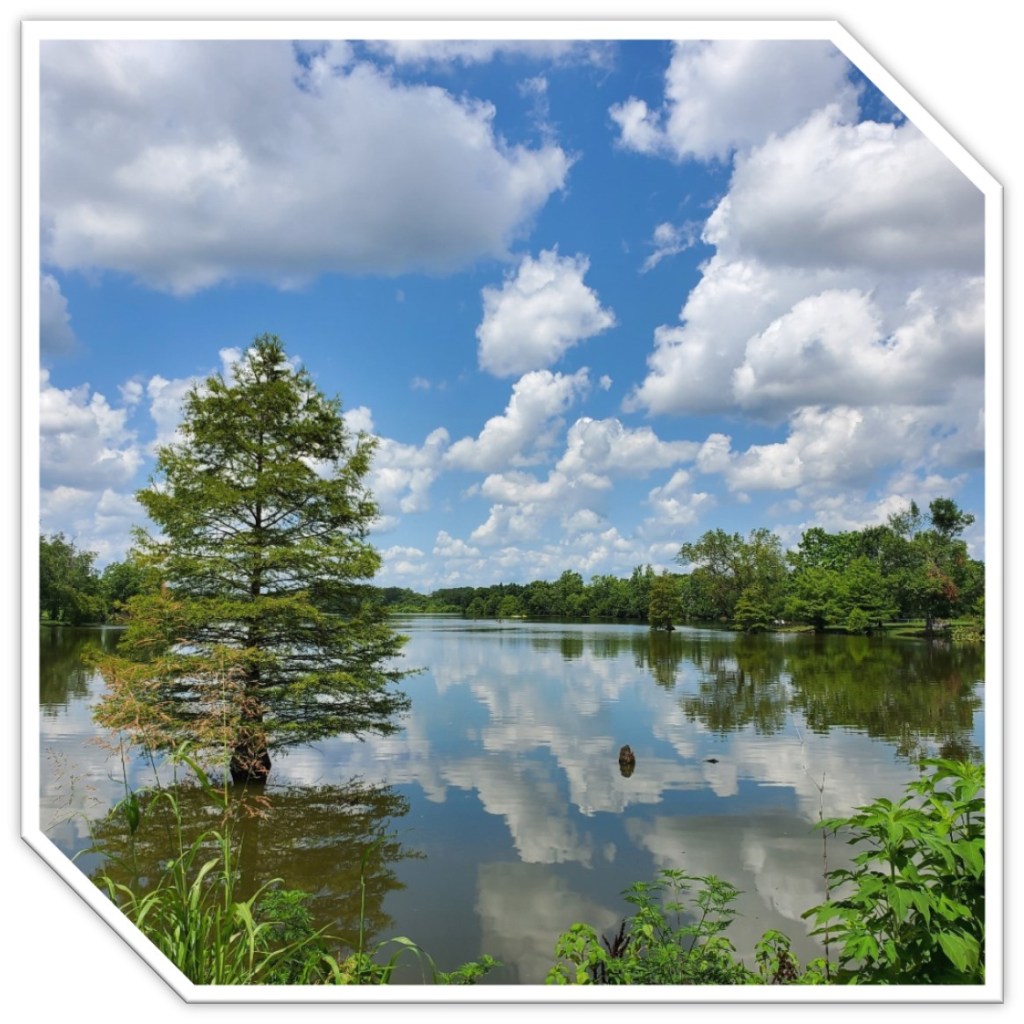
Kayaking on a serene lake has been a vision of mine for a few years. Not knowing how to kayak alone kept me from making it a reality until recently. While strolling through the Lexington Parks & Recreation website, I stumbled upon an introduction to kayaking class at Jacobson Park. I eagerly signed up. This was the perfect opportunity.

After being instructed on land, I embarked on my maiden voyage with a few other participants, each in a brightly colored teal or red vessel. Landing my bum in the seat was not a graceful act by any stretch of the imagination. However, I did manage it and began to focus on the technique our instructor gave us.

After several minutes of ensuring we were secure, she turned us loose on the lake to roam at leisure and try our new skills. I headed for the other end of the lake to a cove filled with many kinds of waterfowl.

To propel forward at the smoothest pace possible, focusing on the paddling technique, which did not come naturally, was critical. As I improved my new skills, my body began to sway from side to side with each stroke, creating a motion I still feel when I close my eyes and imagine I am on the lake. It is a tranquil place to be.

I realized afterward that everything else on my mind that morning had vanished as I peacefully made my way across the quiet waters, focusing on my technique so that I could do my best to master the new skills and enjoy the journey.

Isn’t that what we are called to do in life? Focus on improving ourselves and being our best for God instead of looking at the mistakes of others, pointing fingers, and complaining. When I am focused on my flaws, improving myself, and trying to please God daily in my words and deeds, I don’t have time to criticize others. This makes the journey more enjoyable in light of God’s grace and love as I try to master these new techniques and learn to love others well.

God is not done. He is always working. He has the final say. I am a work in progress, and so are you. I have more peace at the end of the day when I show others the grace that God has shown me and work to please God, not people. That is the best way to propel our relationship with Christ forwardand experience the peace that surpasses understanding.

The kayaking class was an outstanding experience that gave me the confidence to go again, hopefully in the not-so-distant future. God gives us strength in our weakness, courage to overcome fear, and the God-confidence we need to embrace who He created us to be.

“And the peace of God, which surpasses all understanding, will guard your hearts and your minds in Christ Jesus” (Phil. 4:7, ESV, emphasis added).

“My grace is all you need. My power works best in weakness” (2 Cor. 12:9, NLT, emphasis added).

Peter’s Denial

Would you want to be in Peter’s shoes when he realizes Jesus’ prophetic prediction of his denial has just come true? Peter’s famous last words to Jesus, as we read them in the book of Mark, were, “If I must die with you, I will not deny you” (The Bible, ESV Study Bible. English Standard Version. Mark 14:31, emphasis added). Jesus had just told Peter that he would deny Him not just once but thrice that night before the rooster crowed twice (Mark 14:30). Jesus predicted Peter’s denial of Him.

Peter boasted of his loyalty before danger struck. Still, sure enough, when push came to shove, Peter felt fear sweep over him as he warmed himself by the fire. While Jesus was being questioned, spit on, and beaten – he denied knowing Jesus. Just then, a rooster crowed, and then again, he denied it, and the third time, he swore that he did not know Jesus. Each denial is more intense, but he recoiled when the rooster crowed for the second time. Saddened, Peter remembered the words of Jesus at that moment and wept bitterly when he realized what he had done (Mark 14:66-72). His betrayal probably made him think of himself as another Judas. We must remember that his treachery had happened just moments before. Peter may fear that he cannot be forgiven considering what Jesus said: whoever denies Him, He will deny before the Father (Matt. 10:33).

Nevertheless, as we read in the book of John, after Jesus’ resurrection, upon finishing breakfast, Jesus takes Peter aside for a private conversation. He asks him three times if he loves Him, each more intensely. Does that sound familiar? Peter gets frustrated and hurt by Jesus’ questioning, but each time, we see Jesus asking Peter to feed and tend to His lambs and sheep (John 21:15-17 emphasis added). Through everything, Jesus knows Peter needs restoration. He offers grace, letting Peter know He has forgiven him and that God can still use him for Kingdom work (Osborne 291).

Today, we can all say we have fallen short and sometimes betrayed or denied Jesus. Still, in His grace, God offers restoration and opportunities to use us to further the Kingdom by feeding His sheep, although He does not need us to complete His mission. What a blessing that He chooses to use us. I pray we turn to Him in repentance when we fail so our fellowship with Christ can be restored.

Works Cited

Osborne, Grant R. Mark, Baker Books, 2014. ProQuest Ebook Central, https://ebookcentral.proquest.com/lib/liberty/detail.action?docID=3425695.

The Bible. ESV Study Bible. English Standard Version. Crossway, 2001.

U-turns Allowed

I recently saw a flock of geese in full-on V formation flying overhead. There were about twenty of them. But, instead of continuing their current path, they managed to do a complete 180 and head in the direction they had just come from; they made a U-turn. I started thinking about the leader. Did he make a mistake in which direction he was taking them? As the rest of the clan followed the leader, how would they know they were on the right path?

This reminded me of my dad. When we went on car rides as a family, we quickly realized that he panicked easily if he thought he missed his turn. The first time we saw this in action, we were headed to the farm after supper, and Mom made a plate for our neighbor, Mr. Hall, something she often did. She told Dad to stop on our way so she could drop off the plate of food.  His house was just around the curve from ours, but Dad had already forgotten. So, just as we began to pass up the driveway, Mom yelled that he missed his turn. Dad slammed on the brakes, and we were rear-ended. This is the first time I recall hearing the term whiplash after my sister Donna’s neck began to hurt.

My siblings and I were sitting in the backseat of our turquoise 1966 Chevy Impala, and with Mom in the front seat, we didn’t get the benefits of her instinctive arm that naturally came across the waists of anyone sitting in the front seat when she was driving. Mr. Hall’s supper ended up all over the inside of the car and us.

After that, Mom learned not to yell when Dad missed turns. The next time we were riding along, and he passed up our turn-off, I remember her calmly turning to him in a monotone voice, saying something like – I think we were supposed to turn there. Panic still ensued, but at least he didn’t slam on the brakes; instead, he began nervously looking for a place to make a U-turn.

As I meandered around the neighborhood, continuing my run that morning, I saw a neighbor walking their dog. When the dog saw me, it wanted to run with me, but the owner, not so much. She guided the dog back to their path with a slight leash tug.

We all go down the wrong path occasionally and make poor decisions, sometimes running off on a whim without consulting God about which direction to take. We may even panic when we realize we are on the wrong path and have made a mess of our lives and caused damage to ourselves and others.

God’s grace not only gives us the space to make a U-turn but helps us clean up the mess and offers complete restoration to heal any damage that occurred while on our hiatus from the path God intended. Thankfully, God is patient with us. We, too, need to be tethered to Christ and let the Holy Spirit guide our hearts instead of allowing our hearts to lead us. The ultimate healing is only found in a relationship with Christ. It is not too late to make a U-turn.

The heart is deceitful above all things and desperately sick; who can understand it?” (Jeremiah 17:9, ESV, emphasis added)