

The Well That Never Runs Dry: Finding Living Water

We’ve all been there—standing over a project, a relationship, or even just our own exhausted hearts, feeling like we’re scraping the bottom of a dry bucket. We spend so much of our lives “digging.” We seek a sense of purpose, carry the weight of expectations, and try to fill ourselves with things that were never meant to satisfy. It’s draining.

But right in the middle of our “dusty” seasons, the Bible gives us this incredible, almost stubborn hope. In Isaiah 55:1, God doesn’t tell us to go find a shovel and dig a better hole; He says, “Come.” He invites us to a different kind of water—what the ancients called Mayim Hayim, or “Living Water.” It’s the kind of water that doesn’t just sit in a tank waiting to be used up; it’s a bubbling, moving, never-ending spring. Today, I want to invite you to stop the “hustle” of trying to stay hydrated on your own and join me at the edge of the well that never runs dry.

Jesus didn’t depend on complex theological diagrams or abstract lessons. Instead, He drew people into the Kingdom through tangible things they could touch, taste, and see. In the Gospel of John, this is clearly shown: Jesus uses everyday objects to reflect our inner selves. Specifically, He equates ‘Living Water’ with the Holy Spirit—a promise that when we come to Christ, our deepest spiritual desires aren’t just temporarily satisfied but ultimately fulfilled forever.

Jesus was the ultimate storyteller because He began with the tangible aspects of life rather than abstract ideas. He understood that if we could grasp the significance of the bread on our tables or the water in our jars, we would gradually come to understand the heart of God.

Other physical objects Jesus used to describe the Holy Spirit include “wind” (John 3:8), which emphasizes the Spirit’s power in moving where He wills; “Olive Oil” represents the anointing—healing and being set apart for a purpose; the gentle presence of God is like a “Dove” or the Peace of the Spirit; while “Fire” signifies purification—burning away the dross in our lives.

While the dove and fire appeared at His baptism and Pentecost, Jesus specifically used wind and water in His direct conversations in the Gospel of John.

When Jesus meets the woman at the well, the “physical object” isn’t just the water—it’s the bucket and the well itself.

When she says, “Sir, you have nothing to draw with, and the well is deep” (John 4:11), she is focused on the physical limitation. Jesus uses that bucket to pivot her heart. He’s essentially saying, “You’re worried about how deep the well is, but I’m talking about a Spring that is already inside you” (John 4:13-14).

By comparing this water to the Holy Spirit, as mentioned, Jesus teaches that God doesn’t want to be someone we “visit” at a well once a week. He wants to be a constant, flowing presence—a literal part of our internal “ecosystem.”

Cistern water is stored through human effort. Living water is given by God.

Cistern Water vs. Living Water

  • Cistern: Stagnant, requires digging, can break, human-maintained.
  • Living Water: Dynamic, flows from the Source, never runs out, Spirit-filled.

When Isaiah 55:1 says, “Come to the waters,” he is inviting people to leave their stagnant, hand-dug pits and return to the original, flowing Source.

“Come, everyone who thirsts, come to the waters; and he who has no money, come, buy and eat” (Is. 55:1).

The only requirement to access this well is thirst.

In a spiritual sense, thirst is the recognition of our own emptiness. Usually, a purchase requires an exchange of equal value. But here, the “Living Water” is so valuable it cannot be bought, yet so free it can be possessed. The water flows, but we must position ourselves at the riverbank.

In Jeremiah 2:13, God laments that His people have committed two evils: “They have forsaken me, the fountain of living waters, and hewed out cisterns for themselves, broken cisterns that can hold no water.” When Jesus speaks with the Samaritan woman, He is essentially responding to the invitation of Isaiah 55. He tells her that the water He gives will become a spring —a bubbling, active fountain—within the believer.

To summarize, cistern water is stagnant, requires manual digging, can break, and requires manual maintenance. In contrast, Living Water is living and dynamic, flows freely from the Source, never runs out, and symbolizes the presence of the Holy Spirit within.

Are we attempting to survive on “cistern water”—relying on past successes, our own efforts, or outdated traditions? Or are we poised at the edge of the Living Water, which renews itself each morning?

Refection:

“If you left your ‘water jar’ (your primary source of stress or self-reliance) at the well today to follow the Living Water, what would that jar be labeled?”

As we step into this year, what is one area of your life where you want to “stop digging” and start “drinking” from the flow of the Holy Spirit?

This Week’s Practice: Next time you pour yourself a glass of water or turn on the tap, take a moment to pause. As you feel the water, ask yourself: “Am I trying to ‘dig’ for my peace today, or am I letting the Spirit flow through me?” Let the physical act of drinking be a prayer of return to the Source.

I’d love to hear from you. Drop a comment below and share which physical ‘object’ helps you remember God’s presence the most, or type ‘I’m thirsty’ if you’re joining me at the riverbank today.


Why Godly Fruit Isn’t Earned, But Grown by the Spirit

Bearing fruit in season and out of season, like an evergreen planted by a flowing stream, producing vibrant green branches year-round, comes from a heart guided by the Holy Spirit (Ps. 1:3; Jer. 17:7-8).

When Paul talks about staying in sync with the Spirit, he means letting God lead (Gal. 5:25, ESV). When our hearts are transformed by accepting Christ and the Spirit enters, we can start to produce the fruits of the Spirit that mirror God’s character (Gal. 5:22-24). There is an urge to actively cooperate with the new life we’ve received.

The fruit isn’t just something we produce on our own. Spiritual fruit comes from being made in the likeness of God’s image. Day by day, we as Christians can strive to become more like Jesus, who exemplified all aspects of God’s character as a model for us to follow. We are made in God’s image (Gen. 1:26).

Jesus is described as the perfect “image of the invisible God” (Colossians 1:15) and the “exact imprint of his nature” (Hebrews 1:3). He perfectly demonstrated the character qualities we call the Fruit of the Spirit.

On the path to becoming like Christ, we often fall short because of our human nature. The flesh cannot please God without the work of the Holy Spirit in our lives and hearts (Rom. 8:8). Paul describes a struggle between flesh and spirit, a division caused by human sin that prevents us from doing what is right in God’s eyes until we accept Christ. Then, the Holy Spirit equips us with the spiritual armor needed to fight battles and push back the devil. The Spirit fights against sin, not just defensively but offensively, developing in Christians the positive qualities of a godly character, all of which are seen in Jesus in the Gospels (Gal. 5:22-23).

The Spirit’s essential role in equipping the believer is to strengthen us.

  • Defensive and Offensive: The Holy Spirit doesn’t just passively wait; He actively fights against sin. This is the power that overcomes the “works of the flesh” (Galatians 5:19-21) and enables the believer to “walk by the Spirit” (Galatians 5:16).
  • Spiritual Armor: The armor described in Ephesians 6:10-18 is often seen as the tools given by God, with the Holy Spirit acting as the active force that helps us use them effectively (e.g., the “sword of the Spirit, which is the word of God”).
  • Positive Development (Fruit): The ultimate offensive move of the Spirit is the positive development of godly character—the Fruit of the Spirit (love, joy, peace, etc.). This fruit embodies the very character of Christ being formed within us, making the Christian progressively more resilient against sin and temptation.

Isaiah prophesied about a child from David’s line, “There shall come forth a shoot and a branch from the stump of Jesse, and a branch from his roots shall bear fruit. And the Spirit of the Lord shall rest upon him” (Is. 11:1-2, Emphasis added). He was speaking of Jesus the Messiah. He ruled with the help of the Spirit (Is. 4:2). He is described as the root and descendant of David, the bright and morning star (Rev. 22:16).

Jesus set an example for living and invited everyone to wash their robes—no longer living in their old ways (Rev. 22:14). While we wait for His return, we can trust in His promise that we will be together again (John 14:2). Essentially, the Holy Spirit is the way Jesus remains present with us until His physical return, empowering us to live a holy life and grounding us in the certainty of His promise. It guides us throughout our lifelong journey of becoming more like Christ and producing The Fruit of the Spirit in our lives (Galatians 5:22-23).

“He is like a tree planted by streams of water that yields its fruit in its season, and its leaf does not wither” (Ps. 1:3, Emphasis added).

“Blessed is the man who trusts in the Lord, He is like a tree planted by water, that sends out its roots by the stream, and does not fear when heat comes, for its leaves remain green, and is not anxious in the year of drought, for it does not cease to bear fruit” (Jer. 17:7-8, Emphasis added).

The Importance of Repentance

Repentance is a crucial aspect of prayer, clearing the way for God’s will to be fulfilled in our lives. It makes more room in our hearts for His Spirit, which guides and comforts us. If we don’t know what we need to repent of, we can ask God to reveal anything that is hindering His presence in our lives.

In Psalm 51:10, David asks God to create in him a clean heart and renew the right spirit within him. This came after Nathan confronted him with his sin in his life. David’s sin was significant enough that others noticed and held him accountable for it.

Still, there are times when our sin is not as prominent, and we may not realize the need to take it to God and ask for forgiveness and help in changing. Spiritual maturity comes when we openly seek God to help us work on those character traits, emotional responses, and offenses that hold us hostage.

Nehemiah demonstrated a meaningful prayer life modeled after those of Ezra, which included confessing sin as he prayed for others (Neh. 1:4-11; Ezra 9:6-15, ESV). Nehemiah spent four months in intensive intercessory prayer, which provided the power to accomplish God’s will (Neh. 1:1; 2:1, NLT).

Jesus taught his disciples how to pray – not the verbatim words – but the structure that emphasizes how to pray, not what to say (Matt. 6:9, ESV). In verse 12, Matthew notes Jesus’ instruction to ask God to “Forgive us our debts” (Matt. 6:12, emphasis added). The ESV Study Bible notes that this does not mean believers need to ask daily for justification since they are justified forever from the moment of initial saving faith (Rom. 5:19; 8:1; 10:10, ESV).

The repentance I am talking about echoes this sentiment, in that we are not asking to be saved repeatedly; instead, we acknowledge our shortcomings and sinful nature, bringing them to God to restore fellowship with Him when it has been hindered, because we are cautioned not to grieve the Holy Spirit (Eph. 4:30).

Other aspects of the prayers modeled by these historical figures include our praise, thankfulness, and our unworthiness of Christ’s sacrifice. Intercessory prayer can involve asking for forgiveness on behalf of others (Ezra 9:5-6), depending on God to change people’s hearts.

God nailed our note of debt to the cross (John 19:19-22), and those who are recipients of such forgiveness are so moved with gratitude toward Christ that they are more apt to forgive others who have wronged them (Matt. 6:12), clearing their hearts of resentment and clutter that only harms us.

Taking the time to ask God to reveal our offenses and help us correct them will significantly improve our relationship with Him and with others, and, on top of that, it makes our day run more smoothly and with more joy.

“And what does the Lord require of you but to do justice, and to love kindness, and to walk humbly with your God” (Micah 6:8, emphasis added).

Baptism

According to The Holman Illustrated Bible Dictionary, the first act of obedience for a new believer in Christ is a public confession of faith through baptism. It is also symbolic of Jesus’ burial and resurrection. We profess to leave the old life behind and embrace the new life with Christ (Romans 6:4, HCSB). It is a key element of our new faith.

Still, the act of baptism itself does not give salvation. Paul explains to the Romans that to be saved, one must confess with their mouth and believe with their heart (Romans 10:9-13). Baptism can never cleanse a person from sin and secure God’s forgiveness (Brand, 172). Salvation is solely implemented by faith based on the grace of God (Rom. 4:3).

In the first century, there was a ritual self-cleansing, so when John the Baptist began baptizing with water, the act was not wholly lost on the Jews. He did, however, announce the need for repentance and belief in Jesus to make the way for Christ. When Jesus asked John to baptize Him, it surprised John since Jesus never sinned and didn’t need to repent. Nevertheless, it was a prophetic fulfillment of God’s Word.

With this came the gift of the Holy Spirit and baptism by fire. The use of one Greek article governs the two nouns, Spirit and Fire. This denotes that only one baptism is in view, and the addition of fire further defines the character of the Messiah’s baptism.  Water temporarily cleanses the outside, but fire permanently purifies the whole person (Brand, 173).

In Acts, we read how Jesus’ promise to the disciples was fulfilled when the Holy Spirit came upon the 120 disciples at Pentecost; after that, thousands received the gift of the Spirit when they believed (Acts 2:4-12). The Holman Illustrated Bible Dictionary explains, “The blessing of the Pentecostal gift is applied to all disciples at the moment of conversion. “…Jesus is the one who baptizes believers, the Spirit is the element into or with which they are baptized, and incorporation into the body of Christ is the result” (Brand, 174).  God orchestrated a public miracle to demonstrate the gift of the Spirit had been given by enabling the 120 disciples to speak the various foreign languages of the pilgrims in Jerusalem that day (Acts 2:4-12; Brand 173).

In short, when we confess and believe in Christ with all our heart and receive the gift of the Spirit, we follow it up with water baptism to publicly and symbolically announce our decision to follow Christ, leave our old life behind, be buried in the waters of baptism, and live for Christ with their new life by the grace of God.  We are now forgiven for our past, present, and future sins. Condemnation no longer exists for those in Christ Jesus (Rom. 8:1).

This is Good News! But don’t stop there. Paul reiterates that it does not give anyone an excuse to continue in sin (Romans 6:1-11). 

A relationship with God is vital. God gives us the strength to overcome temptation and always provides a way out (I Cor. 10:13). The Holy Spirit refines our sanctification through conviction. Finding our identity in Christ – who God says we are – is essential to our self-worth. Learning God’s character comes from personal experience, intentionality, reading the Word, communicating in prayer, and listening to the Holy Spirit.

The most important question I ever asked God was what He wanted for me. It took me a long time and a lot of heartache to get to this point, but when I finally did, I immediately felt the weight lifted from my shoulders. What are you waiting for? God’s arms are open wide.  

“If you confess with your mouth, “Jesus is Lord,” and believe in your heart that God raised Him from the dead, you will be saved. One believes with the heart, resulting in righteousness, and one confesses with the mouth, resulting in salvation” (Rom. 10:9-11, emphasis added).

“Come to Me, all of you who are weary and burdened, and I will give you rest (Matt. 11:28, emphasis added). “For My yoke is easy, and My burden is light” (Matt. 11:30, emphasis added).

God’s Echo

Echo Valley Farm

I was still praying for my word for the new year that was fast approaching. Knowing I would need to be brave for what He was calling me to do in the upcoming year, I quickly adopted ‘brave’ as my word for 2020.

One of the things I was going to do that year was start a support group for women. Still learning and healing from my past abuse, I knew I had a story to share that could help others walk through their stories as well as teach the red flags of abuse. But I had never led a support group before. I prayed for God to help me as I tried to help other women.

Like most assignments, I needed to go where God led me. He would handle the rest. As many times before, when I show up, He shows out. I knew I could trust Him with the outcome, so I took the next step.  I registered my group on the church site and continued praying for guidance and help.

A couple of weeks into the new year, sitting in my quiet time, the word ‘echo’ was prominent in my mind. I searched for the word’s spiritual meaning. While surfing the internet and letting the Spirit lead me, I found a women’s ministry and a blog post entitled “To Be God’s Echo.” The article explains that the opportunity to tell people again what God had already said was an echo of the Almighty. It said that we must first listen to what He has said.[1]

It spoke directly to my heart for serving women through Faith Walk Ministries and the Sister’s Circle support group. The author said that as she ministers to women, she focuses on three words: encourage, embrace, and echo. I can relate to all three of these words, as one of my Spiritual gifts is encouraging others. I pray often that I will never hurt others with my words but lift them and give hope. Being an echo in the lives of others, to breathe God’s truth and love by being an echo to His heart, was just the inspiration I needed to hear. I knew I still needed to be brave, but my new word for that year was given to me by the purest of hearts: the Holy Spirit. I am amazed every day and still try to echo His truth throughout my ministry wherever He leads me.

If you are as astonished as I was at how God led me to this, wait to hear what happened next. A few days later, I was sitting in my quiet time again with my eyes closed in a dark room, as is my normal posture; I saw words written in cursive in my mind’s eye. I noticed the ‘D’ form, and then the whole name came into focus, ‘Dana West.’

I sat there for a minute, trying to make sense of it. Then, it occurred to me that this is a person’s name. So, just like before, I googled it. While scrolling through the actresses and other people with this name, I saw nothing that grabbed my attention, so I kept going. The next thing I knew, I was reading about a counselor named Dana West in Florida who – you guessed it – helps women deal with sexual abuse.

That is not all; she holds support groups and has been a long-time trainer to other facilitators. My mind was blown away.

I got her contact information and knew I had to call her – I wasn’t sure what to say to her – but I knew God would help me.  I prayed and talked to God about it all that morning. Will she think I am crazy when I tell her I got her name from God? Or maybe I’ll let her know she came, ‘highly’ recommended. I laughed out loud about that one.

With back-to-back meetings that morning, I didn’t get a chance to call until after lunch. Dialing the number, I said another prayer. I figured I would probably get a voicemail, so I said, ‘God, I’ll leave a message, and if she calls me back, I know it is of you.’

To my surprise, the receptionist answered. I told her who I was and that I was calling from Kentucky, and I would like to speak to Dana West or at least leave a message for her. She asked if I was doing a referral. I explained that I was preparing to start a support group and wanted to ask her some questions and connect with her.

The girl assured me she would pass the information on to Dana and see if she wanted to call me back.

She said, “Where did you say you were calling from again?” I am sure she was wondering how in the world I got their info.

A couple of hours later, I got the call. I explained my group and gave some background on myself without sounding unsure why I was calling. I refrained from telling her upfront about God giving me her name until I could understand her spiritual beliefs. Then, as she spoke, I was sure I was talking to a fellow Christ-follower, and I felt the Holy Spirit telling me it was safe.

Her next question was, “How did you get my name?”

Here we go…I was still a little nervous.

I asked, just to be sure, “Do you believe in the Holy Spirit?”

With her affirmation, I told her the story of God writing her name, and my internet search landed me on her website. She explained that if the Holy Spirit gave me her name, she knew what He wanted her to share.

She was helpful, welcoming, and understanding. She asked questions about my abuse and my childhood and shared some of her own stories. She listened as I gave a snapshot of my life and where God has led me in my ministry for women over the last few years.

She asked about my healing process and if I knew about their online resources and classes. She reassured me God would help me lead this group by allowing the Holy Spirit to be the facilitator (something I still do every time). She recommended I pray about the facilitator training and study that would help me go deeper in my healing and then, in turn, be able to dive deeper with the women I want to help.

Then she dropped this little nugget on me.

“I have been praying for God to send me the women that need to talk to me. You are the third person that has reached out to me.”

Wow! I am in awe of this incredible God. Every. Single. Day.

A sister connection through the Holy Spirit. This gives a new meaning to God’s connection; my little brain can’t fully grasp it. Still, I know for sure that God is real, that God is listening, that God hears our prayers and knows our hearts.  He not only connected me to someone who has been in my shoes, understands unhealthy, abusive relationships, and has the heart to help other women as I do, but He also equipped me with the tools to dive deeper into my healing so I could help others more profoundly and completely.

She talked about the women she serves as ‘sisters’ – she said that is what I call them. I informed her of the name of my support group, the ‘Sister’s Circle.’

By divine revelation, God can connect two people who have never met and live a thousand miles apart in such a masterful, incredible way to help each other restore the lives of others. Then she prayed over me and my ministry before we hung up. In her prayer, she said, “For such a time as this.” Esther 4:14 was a prominent verse to me over that last year. I even have a bracelet with the engraving, “Perhaps you were born for such a time as this,” given to me by my friend as a birthday present.

She offered to help me and asked that we stay in touch; what a Godsend and blessing. Sharing her story of redemption and how God has given her a chance to experience a healthy relationship with a godly man who would never abuse her is a beautiful testimony to Christ and what He can do for all of us. He restores, redeems, and heals, and delights in giving us the desires of our hearts. She offered me new hope on my journey. I was content and happy being single with God as my ‘One True Love’ and ‘Constant Companion.’ Still, in God’s timing, I knew it would happen if He had someone for me. That is when I began to list characteristics I wanted in a husband – someone who loves Jesus more than me and prays with and for me, among other specific godly traits – remembering a warning from an older woman I was in a life group with who once told me “You need to be specific when you pray – I had a friend who prayed for a husband, and that’s all she got.”

The Bible also gives us the fruits of the spirit as a guide for desirable qualities we should watch for that the Holy Spirit produces in a person’s life – love, joy, peace, patience, kindness, gentleness, goodness, self-control, and faithfulness (Gal. 5:22-23).

In case you missed it, my recent post,  Hope is Alive, continues the story.


[1] K. Kelly (s.d.) Living Life in Ministry, To Be God’s Echo by Women’s Ministry – Accessed January 15, 2020, through https://womensministry.lifeway.com/2017/08/28/to-be-gods-echo/

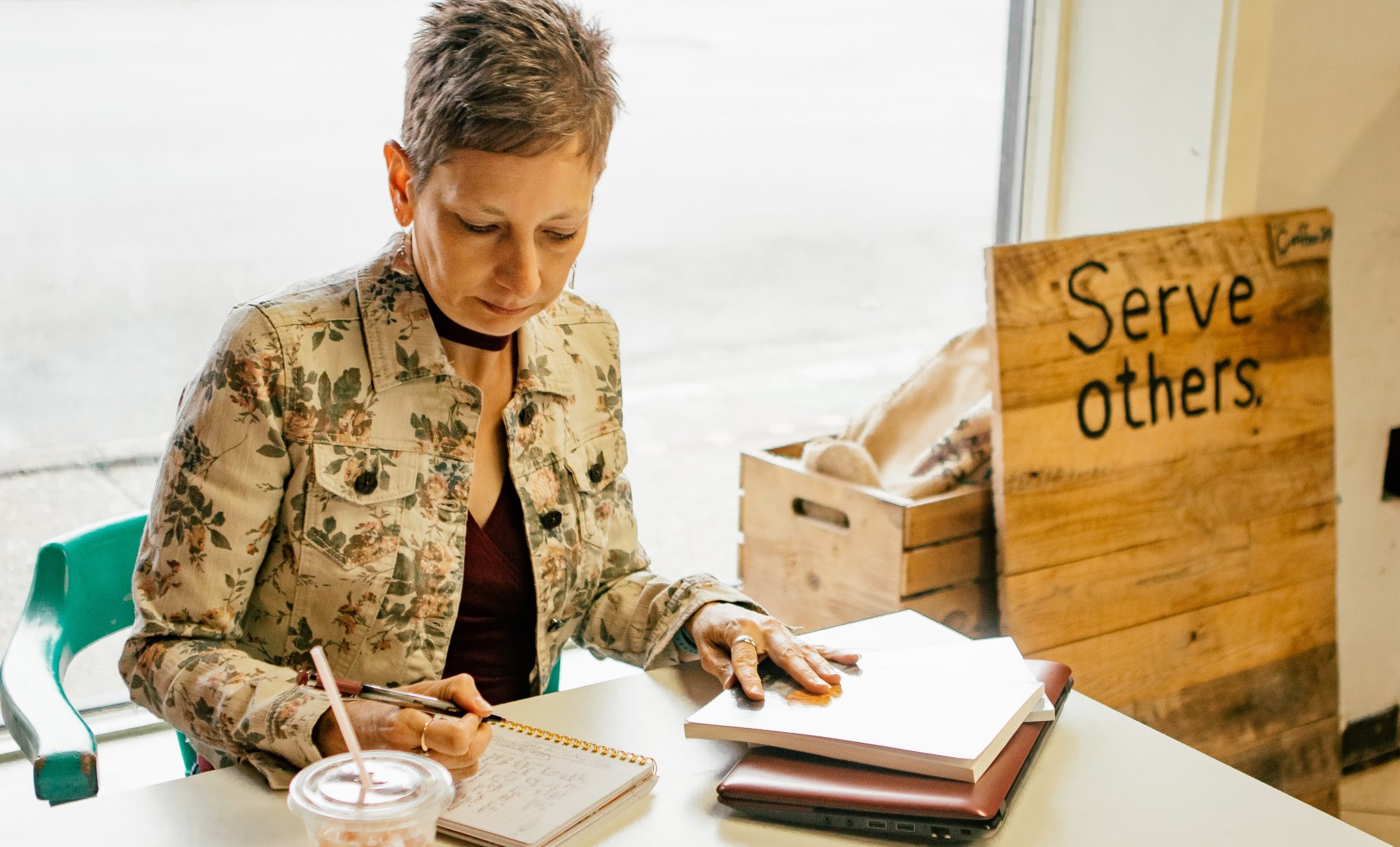
Journaling for Spiritual Growth

Handwritten notes are becoming a lost art. There are many advantages to handwritten notes, besides being thoughtful and showing you care, according to a blog article by Stackoverflow, it is still the best tool for retaining information, improving reading comprehension, and memory.

Along those lines, journaling also has many beneficial traits that enhance spiritual growth. As new year resolutions are prominent, it is best to consider lifestyle changes for a healthier mind, body, and spirit, rather than short-term goals that never quite last.

When I became a Christ-follower, like handwritten notes, I found journaling, while reading my Bible, helped me retain information as I wrote things that stood out to me, along with daily prayers and scriptures. Something I still do daily. It is also nice to go back and read entries from my spiritual journey.

In the tapestry of our hectic lives, a hidden treasure awaits discovery — the transformative practice of Christian journaling. This article invites you to embark on a unique journey, exploring ten distinctive tips that not only enrich your faith but also unveil the extraordinary power of journaling in your spiritual growth.

1: Craft Sacred Moments in Time:

Carve out dedicated moments, crafting a sacred rendezvous with your journal.

Why: These appointed times serve as sanctuaries where divine connections and revelations unfold, reinforcing a steady rhythm of spiritual communion with the Holy Spirit.

Nurture Sanctuaries of Silence:

2: Seek out tranquil spaces that cradle your thoughts in silence.

Why: These sanctuaries foster an environment where whispers from the Holy Spirit are heard, allowing your reflections to flourish in the serene embrace of sacred quietude.

Harvest Gratitude Seeds:

3: Plant the seeds of gratitude at the start of each entry.

Why: By cultivating gratitude, you create fertile soil for spiritual blossoming, where every entry becomes a testament to the abundant grace surrounding your life. Gratitude adjusts your attitude.

Scripture-Woven Meditations:

4: Intertwine your reflections with the rich threads of Scripture.

Why: As you weave God’s Word into your narrative, the tapestry of your faith deepens, creating a luminous panorama of divine guidance and insight.

Courageous Emotional Dialogues:

5: Courageously pen down the symphony of your emotions, both highs and lows.

Why: Honest expression begets emotional release, and by sharing the depth of your heart, you embark on a journey toward healing and authentic spiritual connection.

Goals as Spiritual Compasses:

6: Chart your spiritual course by setting both short-term and long-term goals.

Why: Goals become compasses guiding you through uncharted territories, infusing your journey with purpose and direction. Ask God to help you set and keep them.

Inscribed Prayers:

7: Transform your journal into an intimate dialogue with the Holy Spirit.

Why: By allowing your prayers to dance on the pages, you embrace a sacred conversation, nurturing a profound connection with God that transcends the limits of spoken words.

Milestones as Testimonies:

8: Pause to celebrate and immortalize the milestones on your faith journey.

Why: In acknowledging these pivotal moments, you not only celebrate growth but also create a living testimony to God’s faithfulness in your unique narrative.

Challenges as Spiritual Forges:

9: Chronicle your challenges, seeking divine guidance and resilience.

Why: Within the crucible of challenges, your journal becomes a forge where faith is refined, and through prayerful reflection, you emerge stronger, anchored in the unwavering hope of God.

Conclude with a Surrendered Amen:

10: Conclude each entry with a prayer of surrender, placing your day in God’s hands.

Why: This concluding act of surrender is a sacred seal, affirming your trust in the Divine authorship of your life’s story and inviting the peace that surpasses understanding.

Benefits of Journaling:

In the artistry of journaling, you unearth a reservoir of benefits. Beyond the written words, the act of journaling becomes a sacred voyage that deepens self-awareness, fosters emotional well-being, and cultivates an intimate relationship with the God. Your journal becomes a mirror reflecting the tapestry of your faith journey, a map guiding you through unexplored realms, and a timeless testament to the extraordinary power of a pen dipped in grace.

I encourage you to pray for the best way to set an affective daily spiritual growth plan that you will stick to, for years to come, with God’s help and direction.

Happy New Year & happy journaling!