

God’s Echo

Echo Valley Farm

I was still praying for my word for the new year that was fast approaching. Knowing I would need to be brave for what He was calling me to do in the upcoming year, I quickly adopted ‘brave’ as my word for 2020.

One of the things I was going to do that year was start a support group for women. Still learning and healing from my past abuse, I knew I had a story to share that could help others walk through their stories as well as teach the red flags of abuse. But I had never led a support group before. I prayed for God to help me as I tried to help other women.

Like most assignments, I needed to go where God led me. He would handle the rest. As many times before, when I show up, He shows out. I knew I could trust Him with the outcome, so I took the next step.  I registered my group on the church site and continued praying for guidance and help.

A couple of weeks into the new year, sitting in my quiet time, the word ‘echo’ was prominent in my mind. I searched for the word’s spiritual meaning. While surfing the internet and letting the Spirit lead me, I found a women’s ministry and a blog post entitled “To Be God’s Echo.” The article explains that the opportunity to tell people again what God had already said was an echo of the Almighty. It said that we must first listen to what He has said.[1]

It spoke directly to my heart for serving women through Faith Walk Ministries and the Sister’s Circle support group. The author said that as she ministers to women, she focuses on three words: encourage, embrace, and echo. I can relate to all three of these words, as one of my Spiritual gifts is encouraging others. I pray often that I will never hurt others with my words but lift them and give hope. Being an echo in the lives of others, to breathe God’s truth and love by being an echo to His heart, was just the inspiration I needed to hear. I knew I still needed to be brave, but my new word for that year was given to me by the purest of hearts: the Holy Spirit. I am amazed every day and still try to echo His truth throughout my ministry wherever He leads me.

If you are as astonished as I was at how God led me to this, wait to hear what happened next. A few days later, I was sitting in my quiet time again with my eyes closed in a dark room, as is my normal posture; I saw words written in cursive in my mind’s eye. I noticed the ‘D’ form, and then the whole name came into focus, ‘Dana West.’

I sat there for a minute, trying to make sense of it. Then, it occurred to me that this is a person’s name. So, just like before, I googled it. While scrolling through the actresses and other people with this name, I saw nothing that grabbed my attention, so I kept going. The next thing I knew, I was reading about a counselor named Dana West in Florida who – you guessed it – helps women deal with sexual abuse.

That is not all; she holds support groups and has been a long-time trainer to other facilitators. My mind was blown away.

I got her contact information and knew I had to call her – I wasn’t sure what to say to her – but I knew God would help me.  I prayed and talked to God about it all that morning. Will she think I am crazy when I tell her I got her name from God? Or maybe I’ll let her know she came, ‘highly’ recommended. I laughed out loud about that one.

With back-to-back meetings that morning, I didn’t get a chance to call until after lunch. Dialing the number, I said another prayer. I figured I would probably get a voicemail, so I said, ‘God, I’ll leave a message, and if she calls me back, I know it is of you.’

To my surprise, the receptionist answered. I told her who I was and that I was calling from Kentucky, and I would like to speak to Dana West or at least leave a message for her. She asked if I was doing a referral. I explained that I was preparing to start a support group and wanted to ask her some questions and connect with her.

The girl assured me she would pass the information on to Dana and see if she wanted to call me back.

She said, “Where did you say you were calling from again?” I am sure she was wondering how in the world I got their info.

A couple of hours later, I got the call. I explained my group and gave some background on myself without sounding unsure why I was calling. I refrained from telling her upfront about God giving me her name until I could understand her spiritual beliefs. Then, as she spoke, I was sure I was talking to a fellow Christ-follower, and I felt the Holy Spirit telling me it was safe.

Her next question was, “How did you get my name?”

Here we go…I was still a little nervous.

I asked, just to be sure, “Do you believe in the Holy Spirit?”

With her affirmation, I told her the story of God writing her name, and my internet search landed me on her website. She explained that if the Holy Spirit gave me her name, she knew what He wanted her to share.

She was helpful, welcoming, and understanding. She asked questions about my abuse and my childhood and shared some of her own stories. She listened as I gave a snapshot of my life and where God has led me in my ministry for women over the last few years.

She asked about my healing process and if I knew about their online resources and classes. She reassured me God would help me lead this group by allowing the Holy Spirit to be the facilitator (something I still do every time). She recommended I pray about the facilitator training and study that would help me go deeper in my healing and then, in turn, be able to dive deeper with the women I want to help.

Then she dropped this little nugget on me.

“I have been praying for God to send me the women that need to talk to me. You are the third person that has reached out to me.”

Wow! I am in awe of this incredible God. Every. Single. Day.

A sister connection through the Holy Spirit. This gives a new meaning to God’s connection; my little brain can’t fully grasp it. Still, I know for sure that God is real, that God is listening, that God hears our prayers and knows our hearts.  He not only connected me to someone who has been in my shoes, understands unhealthy, abusive relationships, and has the heart to help other women as I do, but He also equipped me with the tools to dive deeper into my healing so I could help others more profoundly and completely.

She talked about the women she serves as ‘sisters’ – she said that is what I call them. I informed her of the name of my support group, the ‘Sister’s Circle.’

By divine revelation, God can connect two people who have never met and live a thousand miles apart in such a masterful, incredible way to help each other restore the lives of others. Then she prayed over me and my ministry before we hung up. In her prayer, she said, “For such a time as this.” Esther 4:14 was a prominent verse to me over that last year. I even have a bracelet with the engraving, “Perhaps you were born for such a time as this,” given to me by my friend as a birthday present.

She offered to help me and asked that we stay in touch; what a Godsend and blessing. Sharing her story of redemption and how God has given her a chance to experience a healthy relationship with a godly man who would never abuse her is a beautiful testimony to Christ and what He can do for all of us. He restores, redeems, and heals, and delights in giving us the desires of our hearts. She offered me new hope on my journey. I was content and happy being single with God as my ‘One True Love’ and ‘Constant Companion.’ Still, in God’s timing, I knew it would happen if He had someone for me. That is when I began to list characteristics I wanted in a husband – someone who loves Jesus more than me and prays with and for me, among other specific godly traits – remembering a warning from an older woman I was in a life group with who once told me “You need to be specific when you pray – I had a friend who prayed for a husband, and that’s all she got.”

The Bible also gives us the fruits of the spirit as a guide for desirable qualities we should watch for that the Holy Spirit produces in a person’s life – love, joy, peace, patience, kindness, gentleness, goodness, self-control, and faithfulness (Gal. 5:22-23).

In case you missed it, my recent post,  Hope is Alive, continues the story.


[1] K. Kelly (s.d.) Living Life in Ministry, To Be God’s Echo by Women’s Ministry – Accessed January 15, 2020, through https://womensministry.lifeway.com/2017/08/28/to-be-gods-echo/

God Yearns for You

Looking back at the beginning of my journey of becoming a Christ-follower, I realize that it was a process – I didn’t immediately change my old habits, although I wanted to be closer to God. This process of being freed from sin is called sanctification. After repenting and surrendering my life to Christ and asking God what He wanted, the Holy Spirit began to work on my heart. He began to mold and reshape me and my character. Not only did I not want to continue with the old habits, but the conviction was also so firm that I could not hide it.

As I wanted to be closer to God, my old ways and sins had to make way for Christ’s new creation to form. The two cannot co-exist if we make room for Christ and have the relationship He intends for us.  Peace comes when we stop allowing our loyalty to be divided between God and the world.

We can’t feel the closeness and relationship we desire if we are still straddling the fence. But when we go all in – wholly surrendered to Christ – that’s when it all comes together, and we feel His presence, even though He has not gone anywhere – He is always with us – we are the ones who pull away. Feeling distant from God has a direct correlation to our sins. Once we repent and let God’s grace wash over us, the relationship begins to form as we make more room for Him in our hearts.

James points out that it is impossible to please God and the world simultaneously (James 4:4). When we come close to God, He will come close to us (James 4:8). Straddling the fence only makes us miserable. These verses from James echo Jesus’ message – “No one can serve two masters. For you will hate one and love the other; you will be devoted to one and despise the other” (Matt. 6:24, Emphasis added). We must step closer to Him, knowing His arms are open to welcome us. He patiently waits for us to look in His direction and want His comfort. He is a jealous God who yearns for the spirit He placed within us to worship Him alone (James 4:5; John 4:23-24).

God never tempts us – temptation comes from our desires. God always offers a way out of sin and temptation (James 1:13-14). “Submit yourselves therefore to God. Resist the devil, and he will flee from you” (James 4:7, Emphasis added). We must learn to use our spiritual weapons against the devil by speaking Jesus’ name and bearing His armor (Eph. 6:10-18).

We can ask God to reveal anything we are holding on to and ask Him to help us remove it to make more room in our hearts His Spirit. David shows us how to do this, “Point out anything in me that offends you, and lead me along the path of everlasting life” (Ps. 139:24, New Living Translation, Emphasis added). Furthermore, he also gives us a prayer, “Create in me a clean heart, O God. Renew a loyal spirit within me” (Ps. 51:10, Emphasis added). A prayer I often recite.

Our goal should be to draw closer to God daily to allow more room in our hearts for His presence. I encourage you to take a step closer to God today and ask Him to help you yearn for His presence as He yearns for you. God wants to be your first love.

It Really is that Simple

Have you noticed how we complicate simple things? The life Jesus calls us to is straightforward – treat others well and live your best life – enjoy My creation –  let everything else roll off you like water off a duck’s back. Okay, Jesus might not have referenced a duck, but the Bible is clear that we are not to worry about our lives (Matt. 6:34, English Standard Version). We tend to complicate life with our agenda. Pride gets in the way, and we let our ego take over, afraid someone will take advantage of us as we try to control things only God should control.

In the scheme of things, does it matter? If we are doing our part to make this a better place to live, loving others, and being the hands and feet of Jesus to the best of our ability – isn’t that all that matters in the end if we want to hear the words “Well done, good and faithful servant” (Matt. 25:23, Emphasis added).

Jesus has our backs. Even if someone doesn’t have our best interests in mind, we can live with a good conscience and have peace of mind when we are focused on Christ and doing our best to treat everyone with love and kindness – seeing everyone as someone made in the image of God (Gen. 1:27).

Jesus taught and modeled how to treat people. He said we must love our enemies and pray for those who torment us (Matt. 5:43-44). That is the opposite of what we want to do, but we are called to a higher standard as Christians.

Paul talks about this in various locations throughout the New Testament. As we are one in Christ, old divisions and wrongful attitudes of superiority and inferiority are eliminated (Gal. 3 28). The law revealed people’s sinfulness and need for a Savior and served as a guardian until Christ came. Life under the law was slavery, while life in Christ offers freedom (Gal. 3:19-24).

Our love for Christ and gratefulness for our freedom drive our obedience as Christians, and we want to do what is right in His sight. Furthermore, we are called to love one another with brotherly affection and outdo each other in showing honor (Rom. 12:10). Romans 12:9-21 provides the marks of a faithful Christian, including overcoming evil with good, never taking vengeance into our own hands.

It all boils down to one simple phrase – love God, love people. It’s that simple.

Let’s do our part to be kind and see what happens.

God’s Justice and Love Meet at the Cross

At first glance, some Old Testament stories of God’s wrath may be hard to swallow. In reconciling God’s character as a loving God, we must first put it into context and not single out one instance apart from the rest of the Bible, which displays His mercy in that He supplied the resolution through His Son, Jesus.

Human sin separated people from God. But He still wanted to be with them. How often do we read God’s Word in the OT, saying, “You shall be my people, and I will be your God” (Jer. 30:2, English Standard Version, Emphasis added)? The punitive righteousness of God was the only way. Righteousness itself is grounded in the character of God (Brand, 2015, 1673). Still, God is love. He incredibly displayed His radical love by giving His Only Son as a substitute for sin because He wants us to be in a relationship with Him. No matter what we have done – He still loves us immensely.

Like many today, the people in the Old Testament stories refused to believe in the Creator and worshipped creation – known as idolatry. Our objects of worship may look different, but it is the same old problem. We still put other people and things ahead of God. Unlike in those days, we now have hope in Jesus Christ, who stands in the gap, allowing us to be forgiven forever. Jesus Christ received the punishment we deserved, showing God’s abundant and deep love for His people.

The righteousness of God, as presented by Paul in Romans, shows how the character of God not only demands judgment for sin but supplies the answer to sin through Christ’s death and resurrection for all those who believe.  According to The Message of Romans, John Stott explains that Paul must defend God’s behavior and righteous character. “He is convinced that whatever God does – in salvation (3:25) or in judgment (2:5) – is consistent with his righteousness” (Stott, 2021).

God’s love toward His people calls for salvation through grace to enjoy a relationship with Him despite our sinful condition. His holiness demands an answer that only Christ could fulfill. In that fulfillment, His merciful love shines through and benefits us.

Therefore, God is not only the Just but also the Justifier, with an image at the cross where God’s justice and love meet (Rom. 3:26).

The best part is that we don’t have to wait to clean ourselves up and change our character – God wants us to come as we are – He will do the rest. He isn’t looking for perfection – He’s seeking a willing heart.

Bibliography

Brand, Chad., ed. Holman Illustrated Bible Dictionary, B & H Publishing, 2015.

Stott, John. The Message of Romans, InterVarsity Press, 2020. ProQuest E-book Central, http://ebookcentral.proquest.com/lib/liberty/detail.action?docID=6406189.

Purpose in the Pain

I look forward to spring flowers and sunny days kayaking in this season of cold and wintry conditions. Even though the first snow excites me, I miss running. There are reasons to appreciate all seasons. It is the same with life. I realize that if I had not been in the valley, at times, I might not have appreciated the mountaintop experiences as notably.

The valley also helps us learn to depend on God. It may seem the opposite of our nature, but thanking God during those seasons is beneficial. We can blossom even during the off-season if rooted in His Word, allowing it to cultivate the spiritual soil for ultimate growth.

Similarly, God designed the flower to reach its full potential through proper preparation. Its cycles are fascinating. Before we plant flowers, we must cultivate the soil and prepare it to receive the seed for ultimate growth. If the ground is too hard, the seed won’t take root.

The Avas Flowers site explains the cycles of a flower’s life:

Seed Stage: Every seed has a miniature plant that needs the proper nutrients to begin new growth. Some seeds can still grow after many years if they are correctly kept.

Germination: A seed in the earth will need warmth and water to grow. Some even need light at this stage. The seed will absorb water to split the outer shell, opening it up to a transformation as it begins to sprout a stem. The tiny root begins to push its way down as it grows. According to this article, seeds have different needs; some need to go through a fire to sprout, while others go through the stomachs of animals.

Growth: When the leaves begin to form, they convert energy from sunlight and water along with other nutrients to use as food. The root system uses the food to continue to develop, anchoring the plant into the ground, and uses root hairs to absorb water and nutrients. The stem is used to reach toward the light as it sends water and food to the roots and leaves. Then the buds begin to develop to later produce the beautiful blooms we so enjoy.

Reproduction: As the bud forms, it has a tiny but complete flower. Over time, the bud opens and blossoms into a mature flower.

Pollination: Flowers depend on insects, birds, animals, wind, and water to carry pollen from flower to flower. Without pollinators, they could not produce more seeds or new plant life. Even flowers that can’t make their pollen rely on and benefit from other plants during cross-pollination, resulting in more vigorous plants.

Spreading Seeds: This is the final stage in many ways. The wind can scatter the seeds, and the fur of animals, such as humans, water, etc., can carry the seeds to other locations. But a new plant life cycle begins once the seeds fall to the ground.

Consider the God-given design and the little details for a flower to grow, bloom, and thrive. Now, think about how we are designed. Cultivating the hard ground to prepare for the seed is like God cultivating our hearts – if it is still a hard and stony heart, the seed won’t take root. It must be rooted in fertile soil and be fed the right messages of His truth to grow to its full potential.

The roots send nutrients through the stem so it can stand firm to produce the bloom. We also need to be rooted deep in the Word to be fed and stand firm against the enemy to deliver the kind of fruit pleasing to the Creator.

The flower needs the sun’s light to flourish, just as we need the light of the Son in our lives. When we bloom where we are planted, God can use us no matter where we are if we stand tall and look to Him. He supplies the living water of the Spirit to nourish us and help us grow to our full potential into the beautiful bloom He created us to be.

We can grow better if we surround ourselves with suitable pollinators (Christian friends). At times in our lives when we cannot self-pollinate, we have others to lift us and help us through to the other side. It has been said that we are the average of the friends we hang out with the most. In that case, we need to find friends like what we want to become. Otherwise, we will be taken over by weeds, smothered, and eventually wilt.

There is a full- complete flower inside all of us waiting to bloom in the light of Christ’s love. Some of us go through the fire to get there; everyone goes through different experiences that lead us to Christ. But our life experiences help us relate, and we can share our story to assist others by spreading the seeds and message to direct others to Christ and, ultimately, the Kingdom.

Some of the most challenging seasons in our lives bless us and others the most, depending on how much we allow God to use them.

Food for thought:

What if the thing you are going through is preparing you for a bigger purpose?

Matthew 3:18-32

(Parable of the seeds)

Hope is Alive

God is real. Hope is alive in Christ.

Those following my journey know that my heart has been guarded for a long time. I hadn’t dated in almost ten years after coming out of an abusive relationship. After becoming a Christ-follower, I learned more about who I am – as God’s child and who He says I am, instead of listening to Satan’s lies.

I have been building on my relationship with God, learning to make better decisions (making decisions at all is a huge accomplishment), and more about myself, such as my favorite things. God also helped me set and achieve some incredible goals I never had in mind.

I have not hidden my story but allowed God to use it to help others. This blesses my life immensely and takes the edge off the painful experiences. I can testify to the fact that God is a Redeemer.  

I didn’t know if God was preparing someone for me – but a while back, I began to have hope that He was. A few years ago, God connected me with a woman in Florida named Dana, who is a counselor for women who have been abused. She had her own story to share – but what stuck with me is that she also told me there was hope. She had re-married a wonderful man who respected her, and she wanted me to know there were still good, godly men in this broken world.

Even though, for anyone who asked, I was not looking for a man, I realized in my heart that if God had someone for me, He would need to put them in my path and show me. It couldn’t be of my own doing but rather something of God beyond the shadow of a doubt. He did just that. Every step of the way, God has been abundantly clear with confirmations. Even when the enemy tried to steal my joy with doubts and fears – God restored peace in my heart and supplied a patient, prayerful companion to help me through it.

Hope is essential to our journey. It provides the ingredients needed for perseverance on our walk with Christ.

Through Faith Walk Ministries and the care group I lead, the Sister’s Circle, God allows me to share this hope with other women survivors, as Dana did for me. As you may have noticed, I have a new name – but more than that – I am excited to share that I have a wonderful new husband who respects me, loves Jesus, and prays with and for me…just a few things from my laundry list of requirements I told God about a few years ago.

The Bible supplies a filter for character traits to seek – I Cor. 13:4-8. If you have not read this lately, please do, but I will give you a few of them: Love is patient and kind; it does not envy or boast; it is not rude or arrogant and does not insist on its own way…love bears, believes, hopes, and endures all things.

There is hope. God redeems.

If you know anyone who could receive help from the Sister’s Circle support group, please share this blog and the link above for information about how to sign up.

“May the God of hope fill you with all joy and peace in believing, so that by the power of the Holy Spirit you may abound in hope” (Romans 15:13, English Standard Version, Emphasis added).

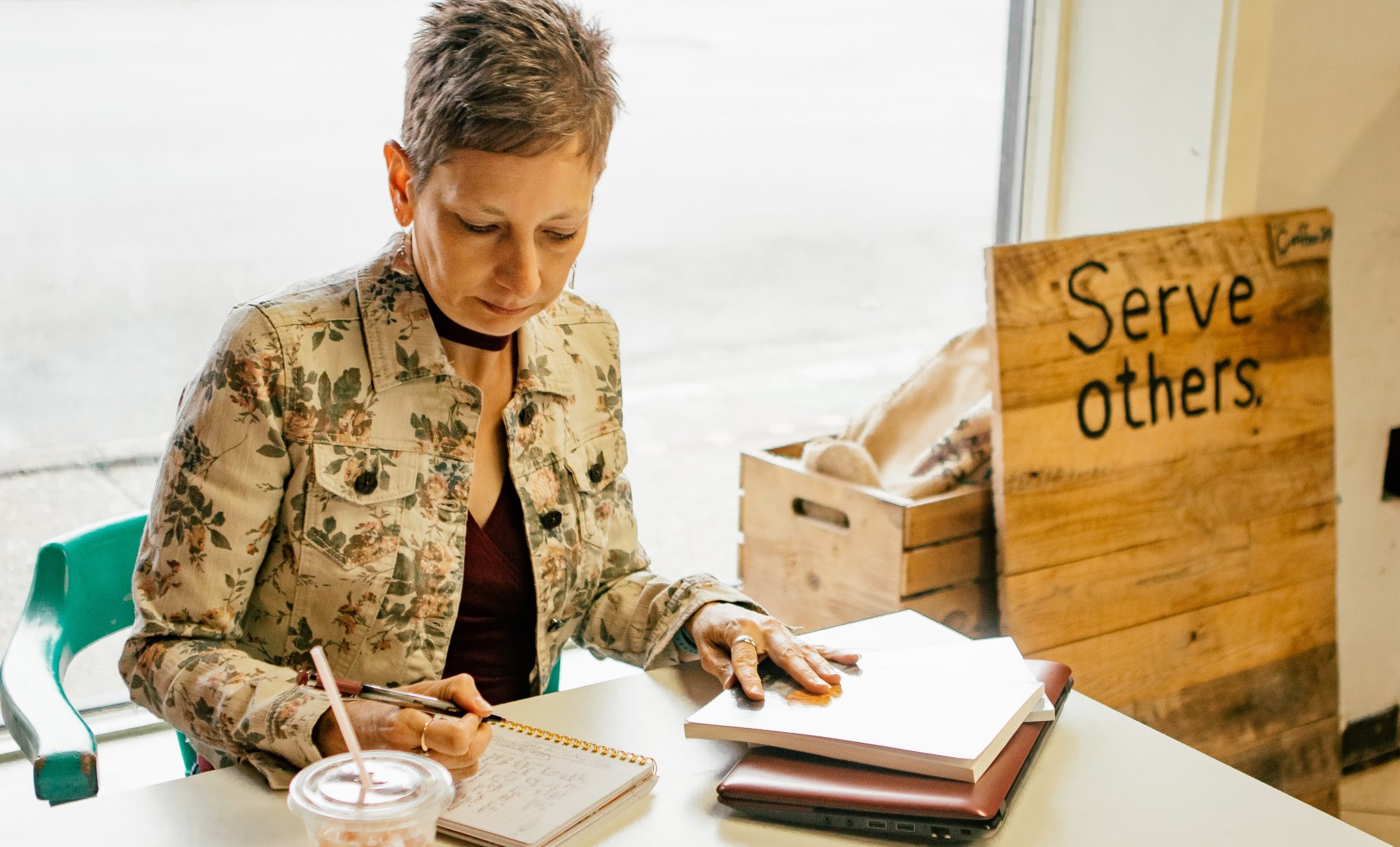
Journaling for Spiritual Growth

Handwritten notes are becoming a lost art. There are many advantages to handwritten notes, besides being thoughtful and showing you care, according to a blog article by Stackoverflow, it is still the best tool for retaining information, improving reading comprehension, and memory.

Along those lines, journaling also has many beneficial traits that enhance spiritual growth. As new year resolutions are prominent, it is best to consider lifestyle changes for a healthier mind, body, and spirit, rather than short-term goals that never quite last.

When I became a Christ-follower, like handwritten notes, I found journaling, while reading my Bible, helped me retain information as I wrote things that stood out to me, along with daily prayers and scriptures. Something I still do daily. It is also nice to go back and read entries from my spiritual journey.

In the tapestry of our hectic lives, a hidden treasure awaits discovery — the transformative practice of Christian journaling. This article invites you to embark on a unique journey, exploring ten distinctive tips that not only enrich your faith but also unveil the extraordinary power of journaling in your spiritual growth.

1: Craft Sacred Moments in Time:

Carve out dedicated moments, crafting a sacred rendezvous with your journal.

Why: These appointed times serve as sanctuaries where divine connections and revelations unfold, reinforcing a steady rhythm of spiritual communion with the Holy Spirit.

Nurture Sanctuaries of Silence:

2: Seek out tranquil spaces that cradle your thoughts in silence.

Why: These sanctuaries foster an environment where whispers from the Holy Spirit are heard, allowing your reflections to flourish in the serene embrace of sacred quietude.

Harvest Gratitude Seeds:

3: Plant the seeds of gratitude at the start of each entry.

Why: By cultivating gratitude, you create fertile soil for spiritual blossoming, where every entry becomes a testament to the abundant grace surrounding your life. Gratitude adjusts your attitude.

Scripture-Woven Meditations:

4: Intertwine your reflections with the rich threads of Scripture.

Why: As you weave God’s Word into your narrative, the tapestry of your faith deepens, creating a luminous panorama of divine guidance and insight.

Courageous Emotional Dialogues:

5: Courageously pen down the symphony of your emotions, both highs and lows.

Why: Honest expression begets emotional release, and by sharing the depth of your heart, you embark on a journey toward healing and authentic spiritual connection.

Goals as Spiritual Compasses:

6: Chart your spiritual course by setting both short-term and long-term goals.

Why: Goals become compasses guiding you through uncharted territories, infusing your journey with purpose and direction. Ask God to help you set and keep them.

Inscribed Prayers:

7: Transform your journal into an intimate dialogue with the Holy Spirit.

Why: By allowing your prayers to dance on the pages, you embrace a sacred conversation, nurturing a profound connection with God that transcends the limits of spoken words.

Milestones as Testimonies:

8: Pause to celebrate and immortalize the milestones on your faith journey.

Why: In acknowledging these pivotal moments, you not only celebrate growth but also create a living testimony to God’s faithfulness in your unique narrative.

Challenges as Spiritual Forges:

9: Chronicle your challenges, seeking divine guidance and resilience.

Why: Within the crucible of challenges, your journal becomes a forge where faith is refined, and through prayerful reflection, you emerge stronger, anchored in the unwavering hope of God.

Conclude with a Surrendered Amen:

10: Conclude each entry with a prayer of surrender, placing your day in God’s hands.

Why: This concluding act of surrender is a sacred seal, affirming your trust in the Divine authorship of your life’s story and inviting the peace that surpasses understanding.

Benefits of Journaling:

In the artistry of journaling, you unearth a reservoir of benefits. Beyond the written words, the act of journaling becomes a sacred voyage that deepens self-awareness, fosters emotional well-being, and cultivates an intimate relationship with the God. Your journal becomes a mirror reflecting the tapestry of your faith journey, a map guiding you through unexplored realms, and a timeless testament to the extraordinary power of a pen dipped in grace.

I encourage you to pray for the best way to set an affective daily spiritual growth plan that you will stick to, for years to come, with God’s help and direction.

Happy New Year & happy journaling!

The Uncomfortable Comforter

A few years ago, I was in the waiting room at the doctor’s office when an older man in a wheelchair came in. He was sitting across the room from me and began talking out loud – to nobody in particular – and anyone who might listen. Most people ignored him.

He was questioning why God still had him in this world. Then he said, “All I ever wanted was somebody to love me.” The Holy Spirit nudged me, and I headed over and sat in the empty chair beside him, smiling, unsure what to say. It is better to let the Holy Spirit guide my words; all I had to do was be willing to go. That way, God gets all the glory.

I said, “God loves you.”

That opened a door for him to tell me more about his relationship with the Holy Spirit, whom he fondly called the Comforter. He remembered times when he sat alone with the Good Book and felt the presence of the Holy Spirit with him. He shared that he had tried to tell his dad about the Comforter, but he wouldn’t listen. I knew God put me there for a reason – to remind him of his Father’s love and to bring peace.

In explaining the Holy Spirit to the disciples before His ascension, Jesus describes Him as the Helper, whom the Father will send to bring remembrance to everything Jesus told them. He follows that promise with another – peace (John 14:25-27 English Standard Version).

When we remember what Jesus taught about how to conduct ourselves and strive to obey the Father and His will – peace follows. Paul admonishes us to stay in step with the Holy Spirit (Gal. 5:25).

Still, an uncomfortableness is also associated with the Holy Spirit that comes when we are out of God’s will and away from obedience. This conviction is necessary for any true transformation in our lives and hearts. The continual process of sanctification helps us become more like Jesus.

If we are never uncomfortable, we won’t have the motivation to change. This is by the design of our Heavenly Father. It is also true for our children. In a recent group meeting, a friend and respected mentor shared his philosophy – if he teaches his kids to love Jesus and put Him first, he knows the rest will work itself out. He recommended the book Parenting by the Book by John Rosemond, which discusses making your kids uncomfortable to initiate desired character traits and positive changes. If you are a parent of a pre-teen or teenager, I highly recommend you check it out or share it with someone who is. We are not doing them any favors by not allowing them to be uncomfortable.

H.E.A.R.T.

A few years ago, I had the opportunity to be part of a leadership group at my church, where we spent a year learning more about God, ourselves, and the church. One of the assignments was to read the book The Heart of Leadership: Becoming a Leader People Want to Follow by Mark Miller. His acronym for the word heart stuck with me, and until recently, it was posted on the side of my refrigerator for me to see every morning. I still pray for God to help me with these traits to be a better leader.

It goes like this: Hunger for Wisdom, Expect the Best, Accept Responsibility, Respond with Courage, and Think of Others First.

Miller speaks of these as character traits – to be regarded higher than any skills we may have or acquire. It is an issue of the heart, and the only remedy is accepting Christ so the Holy Spirit can shape our character.

Paul writes that suffering produces endurance, which builds character that leads to hope through Christ (Rom. 5:3-5). Our character is the fruit of the spirit everyone should want to have – love, joy, peace, patience, kindness, goodness, faithfulness, gentleness, and self-control (Gal. 5:22-23). One of my favorite verses that follows this that I pray every morning is that God would help me “Keep in step with the Spirit” (Gal. 5:25, Emphasis added) so that I can please Him and align with His will.

The book is described as a road map for anyone wanting to make a difference and be a leader others want to follow. There are many verses in the Bible about wisdom, but one that stands out for me is when Solomon could have asked for anything, and he chose to ask God for wisdom so he could lead his people well. God gave him wisdom and understanding beyond measure (I Kings 4:29, English Standard Version). He hungered for wisdom – not for himself – but to glorify God in leading the people. He later had much of his kingdom removed by God because of his foolish decisions. Still, he is the one others are measured by when it comes to his wisdom. Jesus surpassed his wisdom and is more significant than Solomon (Matt. 12:42).

James writes that if anyone lacks wisdom, let him ask God (James 1:5). Wisdom is described as better than jewels, and nothing else compares (Prov. 8:11). In Eccl. 10:10, the author writes that wisdom helps one succeed.

To expect the best is to believe and trust in God, who is the best and wants the best for us.

Accepting responsibility is not always about admitting we are wrong and owning up to our mistakes, although it can be that. Still, there is far more here to be considered. It is also about stepping up to the role God has proposed for our lives.

This will require us to respond with courage. Many times, I have tightened my grip and reminded myself of God’s promise in the book of Isaiah – “Fear not, for I am with you; be not dismayed, for I am your God; I will strengthen you, I will uphold you with my righteous right hand” (Is. 41:10, Emphasis added) when I needed the courage to respond to God’s prompting.

Last but certainly not least, we must understand it is not about us but serving and loving others – thinking of others first is just that, putting ourselves in their shoes and trying to treat them as we would want to be treated (Matt. 7:12); To love God and others (Matt. 22:37-39). Jesus says we are not to exalt ourselves but become servants to others as He modeled for us (Mark 10:43-45). Jesus was the ultimate servant leader that we can strive to be like. Servant leadership empowers others for success – instead of pushing others down as we climb the ladder to the top.

It requires a changed heart that reflects the character traits of Jesus as we put on the new self, including kindness, humility, meekness, and patience, and are being renewed every day to the image of our Creator (Col. 3:8-17).

“And whatever you do, in word or deed, do everything in the name of the Lord Jesus, giving thanks to God the Father through him” (Col. 3:17, Emphasis added).

“My flesh and my heart may fail, but God is the strength of my heart and my portion forever” (Ps. 73:26. Emphasis added).

“Create in me a clean heart, O God, and renew the right spirit within me” (Ps. 51:10, Emphasis added).

This is the way…

How often do we rush ahead of God and want to know where He is leading us – now – instead of waiting on His timing? I know I am guilty of it. Most recently, as I was acquiring my degree, I thought I needed to know who, what, when, where, why, and how He would use it and me when I graduated. After many fretful praying sessions, I realized that my life was much calmer when I relaxed, reminded myself to breathe, and let God come to me in His timing – one day at a time. If I saw the bigger picture, I would be even more overwhelmed than I was when I looked at the whiteboard of assignments on my wall at the beginning of each semester. In God’s timing, the board is now wiped clean. By the grace of God, I made it through.

In the Old Testament, we read how King Saul stepped out ahead of God when things weren’t moving as fast as he thought they should. He tended to be driven by circumstances, relying on religious rituals to gain God’s favor instead of waiting for God’s appointed time (I Sam. 13:8-15, English Standard Version). Does that sound familiar?

Isaiah 13:1-17 records how God’s people forsake Him for false salvation. Still, God promises ultimate abundance, purified of idols, in the next section (I Sam. 18-26, English Standard Version). The word “therefore” in this story stands out in verse eighteen and hinges between these two facts. In other words, because they forsaken Him, His grace was necessary. The verse continues – “The Lord waits to be gracious to you” (Is. 30:18, emphasis added). The ESV Study Bible notes that this is the “amazing logic of grace” – God is the only One who knows the perfect way, time, and process to achieve His purpose.

Many times, like Saul, I haven’t waited and tried to seek God’s favor on my own. But I have found more peace when I let God be God and His Holy Spirit lead me. Isaiah says, “And your ears shall hear a word behind you, saying, ‘This is the way, walk in it,’ when you turn to the right or when you turn to the left” (Is. 30:21, emphasis added). This is the internal guidance of the Holy Spirit, also noted in Rom. 8:14 and Gal. 5:16, 18, and 25. Don’t let external entanglements (idols) replace wholehearted loyalty to God (Is. 30:22). Instead, pray for God to help you “Keep in step with the Spirit” (Gal. 5:16).

In our obedience – God is always faithful. In our faithfulness – God always provides. When we are impatient – God’s grace covers us with gentle kindness and whispers – this is the way; walk in it. Are you listening?

“Wait for the Lord; be strong, and let your heart take courage; wait for the Lord!” (Ps. 27:14, Emphasis added)

“Be still, and know that I am God” (Ps. 46:10, Emphasis added).